Common names
Newfoundland shark, Sharp-nosed shark, White shark
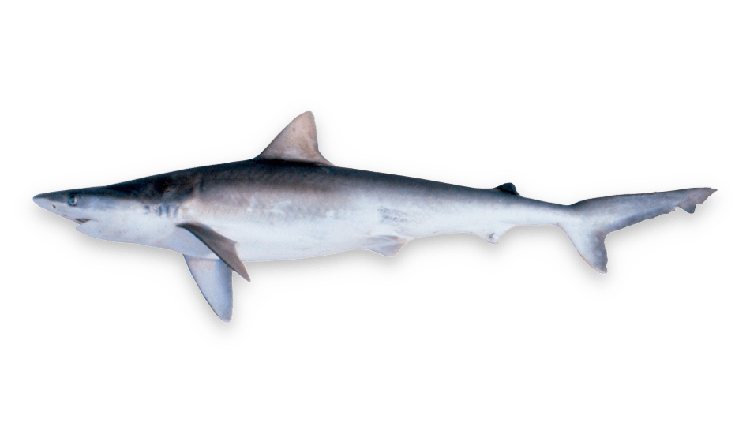
Rhizoprionodon terraenovae
Newfoundland shark, Sharp-nosed shark, White shark
The Atlantic sharpnose shark, relatively small among its counterparts, earns its name from the distinctive long and pointed snout. Sporting a slender frame, it exhibits hues ranging from brown to olive-grey on the back, gradually fading to a whitish belly with various shades of grey characterizing its body. Adults showcase white spots on their sides and along the edges of their pectoral fins. In contrast, young sharks display black on the edges of both their dorsal (back) and caudal (tail) fins. Notably, the first dorsal fin begins well behind the pectoral fin, and the second dorsal fin starts over or behind the middle of the anal fin. The absence of an interdorsal ridge is a distinguishing feature. Examining their jaws, both the lower and upper jaws of the shark boast 24 or 25 rows of triangular teeth.
Atlantic sharpnose sharks prefer to live in warmer shallow coastal waters.
Western Atlantic: New Brunswick, Canada to the Gulf of Mexico. Southwest Atlantic: coasts of Brazil.
Atlantic sharpnose sharks eat small fish, including menhaden, eels, silversides, wrasses, jacks, toadfish, and filefish. They also eat worms, shrimp, crabs, and molluscs. In both the Atlantic and Gulf of Mexico, Atlantic sharpnose sharks mate annually between mid-May and mid-July in inshore waters. After mating they migrate offshore to deeper waters. The mother feeds the pups through a placental sac and after a gestation period of 10 to 11 months the females return to nearshore areas to give birth in June.
Its meat is said to be quite tasty and this abundant, small coastal shark is caught frequently and targeted for their meat as it’s both sold for human consumption and used as bait to target larger species of shark. However, their small fin size makes them less valuable to commercial fisheries than other species of shark.
Chumming is an effective way to draw the Atlantic sharpnose shark close to the boat. Once they are close, they can be caught with a hook baited with a bloody fish. It is advisable to bring a net and gloves when fishing for the Atlantic sharpnose shark. Good bait: live fish bait (Menhaden, Eel, Wrasse, Filefish, and Toadfish), shrimp, crabs, worms, clams & mussels.
Smooth dogfish