Common names
Grouper, Blackfin grouper, Marbled rockfish, Black rockfish
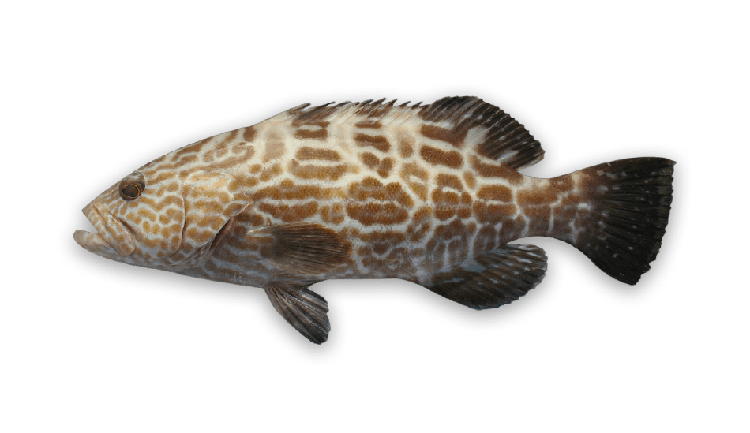
Mycteroperca bonaci
Grouper, Blackfin grouper, Marbled rockfish, Black rockfish
Black grouper typically have dark coloration, with olive, gray or brown bodies and irregular bronze-colored blotches and spots. These groupers have several sets of teeth that help prevent fish from escaping while they’re feeding. The bottom of their preopercle (cheek) is gently rounded (no incisions or lobes). The pectoral fins are sooty brown, fading to orange towards the margin. The soft-rayed part of the dorsal fin and the anal fin, as well as the forward edge of the pelvic fin, have a dark margin. The second dorsal, anal and caudal fins are black on the outer third part of the fin. They have a pale yellow or white margin on their pectoral fins.
Coastal waters near structure. Juveniles can be found inshore. Adults are associated with rocky bottoms, reefs and drop-off walls in water over 60 feet deep.
Black grouper are found in the western Atlantic from Massachusetts to Brazil. They are particularly associated with the southern Gulf of Mexico, Florida Keys, Cuba, the Bahamas and throughout the Caribbean.
Black grouper spawn during the winter months. They are protogynous hermaphrodites, meaning that young grouper are predominantly female and transform into males as they grow larger. Larger individuals of this species are generally found in greater depths and they feed on fish and squid.
Excellent, large individuals may contain ciguatera toxin and elevated mercury levels.
The best lures for grouper fishing are heavy like a large standard jig with a soft plastic trailer or a jigging spoon that drops to the bottom quickly. They are also caught by trolling plugs or spinners. Good bait: live fish - speedo mackerel, pinfish, blue runners, pilchards, threadfins, etc.
Yellowfin grouper, M. venenosa (pectoral fins trimmed in bright yellow)