Common names
Black-spot Tuskfish, Black-spot Tusk-fish, Blue Tuskfish, Purple Groper, Tuskfish, Yellow-bellied Tusk-fish
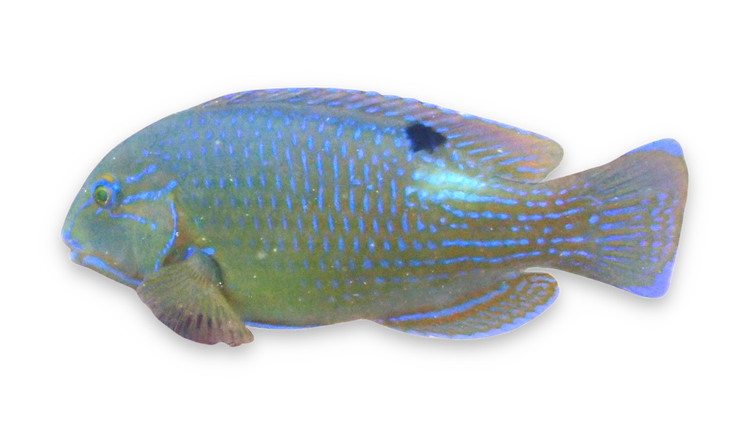
Choerodon schoenleinii
Black-spot Tuskfish, Black-spot Tusk-fish, Blue Tuskfish, Purple Groper, Tuskfish, Yellow-bellied Tusk-fish
Adult blackspot tuskfish are striking fish that often appear blue or bluish-green underwater. A key identifying feature is a small but clearly visible black spot at the base of the last spine of the dorsal fin. Each body scale has a blue center, creating neat horizontal rows of blue spots along the sides, especially toward the rear of the body. Juveniles look quite different, showing a large white saddle-shaped patch just behind the black spot, making them easy to distinguish from adults. The body is streamlined and oval in cross-section, built for strong bursts of power around reef structure.
They are typically found over flat sandy areas, seagrass beds, and weedy bottoms close to lagoon reefs and outer reef edges.
Blackspot tuskfish are widespread across northern Australia, ranging from the Houtman Abrolhos Islands in Western Australia across to at least Julian Rocks in New South Wales. They also occur throughout the Indo-West Pacific, including southern Japan, Indonesia, and as far west as Mauritius.
Blackspot tuskfish are usually solitary and highly territorial. They are carnivores that feed mainly on hard-shelled prey such as crabs, mollusks, and sea urchins. They are born female and later change sex to male, a common trait among tuskfish. This species is also famous for its intelligence, blackspot tuskfish have been observed using rocks as tools to smash open shellfish, one of the rare documented cases of tool use in fish.
Blackspot tuskfish are considered a true delicacy. Their flesh is white, firm, and mildly sweet, making them excellent for a wide range of cooking styles. They are widely regarded as one of the best-eating reef fish species and highly prized by anglers and chefs alike.
Tuskfish are incredibly strong for their size and fight hard to reach reef structure, so robust gear is essential. Medium to heavy rods with good lifting power help keep fish clear of rocks and coral. Unweighted crab baits are particularly effective and hard for tuskfish to resist, especially in shallow water. Use strong, abrasion-resistant monofilament line and a heavy leader, as these fish are notorious for rubbing lines against sharp reef. Hooks should be sharp, strong, and appropriately sized for the bait to keep presentations natural. Expect lost tackle and be ready to re-rig, this is part of tuskfish fishing. Good bait: flesh & (especially) crab baits