Common names
Fourfinger threadfin, Cooktown threadfin, Blue salmon
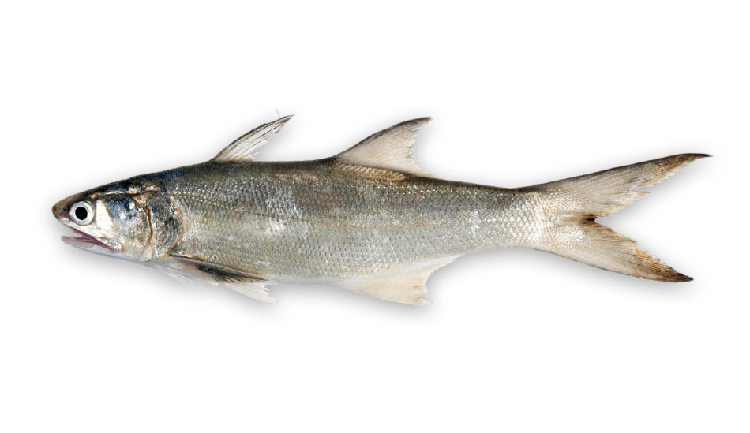
Eleutheronema tetradactylum
Fourfinger threadfin, Cooktown threadfin, Blue salmon
Blue threadfin, this common name comes from the four short filaments that feature on the pectoral fin of the blue – the key way of telling this species apart from the king. The upper sides of the head and body have a slight darkish silver tinge, lighting in the lower flanks. Both dorsal fins show a blackish anterior margin, with the remaining parts of the fins translucent and slightly dusky. The membranes of the pectoral fins are vivid yellow in smaller individuals, but in larger fish, this becomes duskier. The pectoral filaments are white. The pelvic fins are white with a yellow front edge, while the caudal fin is blackish with a yellowish base.
Adults show a preference for shallow muddy substrates in coastal waters and they may enter rivers. The juveniles occur in estuaries.
Have an Indo-Pacific distribution and range from the Persian Gulf to Australia and Papua New Guinea.
It is a carnivorous species which preys on prawns and fish. The fish preyed upon are mainly grey mullets, anchovies and drums, and they sometimes feed on polychaetes. In the winter the adults move up rivers. It is normally observed in loose schools, but larger fish are more often recorded as pairs or individuals.
Blue salmon are regarded as excellent eating, especially fresh, with tender white flesh and good-sized fillets with few bones.
A good way to catch them is trolling quality soft plastic lures. Good bait: live or freshly cut mullet.