Common names
Blue kurper
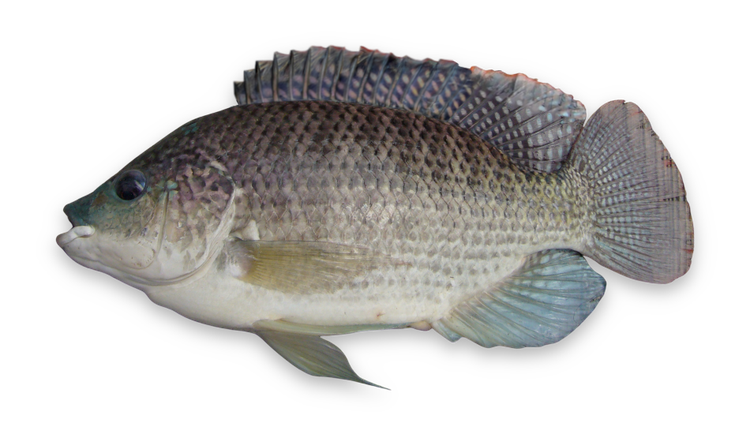
Oreochromis aureus
Blue kurper
Blue tilapia have a caudal fin without regular dark vertical stripes, instead showing a broad pink to bright red margin along the edge. During breeding, males develop an intense metallic blue coloration on the head, a vermilion edge on the dorsal fin, and a more vivid pink margin on the tail. Breeding females display paler, more orange tones on the edges of the dorsal and caudal fins. Juveniles have a sharply angled head profile rising steeply from the snout, a nearly triangular lower pharyngeal bone with numerous teeth, and striped dorsal and anal fins. The soft dorsal fin bears a distinct black “tilapia mark.” Body coloration in juveniles is generally dark. Larger individuals exceeding 3 pounds are commonly identifiable as blue tilapia.
This species inhabits a wide range of freshwater and brackish environments, including rivers, streams, lakes, ponds, canals, and fertile reservoirs. Blue tilapia are highly tolerant of salinity and can also be found in nearshore marine habitats.
Native to northern and western Africa and parts of the Middle East. Through human introduction, blue tilapia are now established in many regions worldwide, including parts of the United States, where they are considered an invasive species due to significant ecological impacts.
Blue tilapia are primarily herbivorous mouthbrooders, feeding mainly on phytoplankton while occasionally consuming zooplankton. Juveniles have a more varied diet that includes copepods, cladocerans, and small invertebrates. They often form schools and can exhibit territorial behavior, particularly during spawning. Reproduction occurs in both freshwater and brackish environments. Males establish territories and excavate shallow spawning pits using their mouths and fins, typically in weedy, shallow areas. Eggs and fry are protected through mouthbrooding.
Blue tilapia are considered excellent table fare. The flesh is white, flaky, and mild in flavor, making it widely popular in commercial aquaculture and grocery markets. Its lean fillets absorb flavors easily, making it ideal for a wide range of recipes using light seasoning and sauces.
Blue tilapia are best targeted with light tackle. A light to medium-action rod paired with a spinning reel spooled with monofilament line works well. Use small hooks (around size #4), small floats, and subtle presentations near spawning areas. Artificial lures are rarely effective; natural baits and stealthy approaches yield better results. Bowfishing is also a popular method for targeting this species, as they are easily spooked in shallow water. Good bait: peas, corn, or pieces of bread
Mozambique tilapia