Common names
Zambezi shark, Ground shark, Cub shark
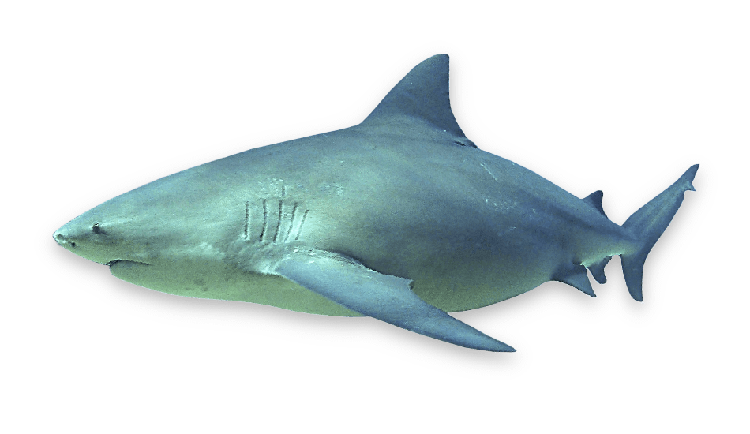
Carcharhinus leucas
Zambezi shark, Ground shark, Cub shark
Bull sharks are large and stout, with females being larger than males. Bull sharks are wider and heavier than other requiem sharks of comparable length, the top side of the shark ranges in colour from pale to dark grey, fading to white on the underside. The second dorsal fin is significantly smaller than the first, which is large and broadly triangular. The bull shark's caudal fin is longer and lower than that of the larger sharks, and it has a short blunt snout and lacks an interdorsal ridge. Pectoral fins are large and angular. Younger sharks have black tips on their fins.
The bull shark is commonly found worldwide in coastal areas of warm oceans, in rivers and lakes, and occasionally in salt and freshwater streams if they are deep enough. Even though they can travel far up rivers, few freshwater human-shark interactions have been recorded.
Cosmopolitan in tropical and subtropical waters, widespread in warm oceans, rivers and lakes. Western Atlantic: Massachusetts, USA to Argentina; eastern Atlantic: Morocco, Senegal to Angola; Indo-Pacific: Kenya and South Africa to India, then, Vietnam to Australia; southern Baja California, Mexico to Ecuador and possibly occurring in Peru. Africa: freshwater found in rivers of West Africa from Gambia River to Ogowe River and in the Cuanza in Angola.
Larger-sized bull sharks are probably responsible for the majority of near-shore shark attacks, including many bites attributed to other species. The bull shark's diet consists mainly of bony fish and small sharks, including other bull sharks and stingrays. Their diet can also include turtles, birds, dolphins, terrestrial mammals, crustaceans, and echinoderms. They hunt in murky waters where it is harder for the prey to see the shark coming. Bull sharks are named for their blunt snout, aggressive nature and tendency to head-butt their prey before attacking.
Without marinating, it has a foul, ammonia-like flavour, but when cooked and marinated properly. May contain higher mercury levels.
Bull sharks respond well to dead, cut baits. Dipping the bait in tuna oil has proven to be especially effective. Bull sharks can also be caught with topwater lures, such as plugs and flies. Good baits: bonita, amberjack, mackerel, eel, or barracuda.