Common names
Brown Sucker, Common Sucker, Short Suckerfish, Short Sucker-fish, Stout Suckerfish, Stout Sucking Fish, Shark sucker, Shark pilot
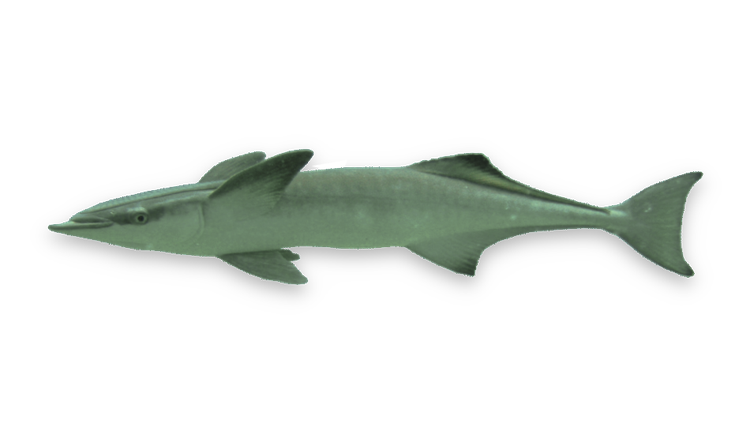
Remora remora
Brown Sucker, Common Sucker, Short Suckerfish, Short Sucker-fish, Stout Suckerfish, Stout Sucking Fish, Shark sucker, Shark pilot
Common remora have a unique sucker-like dorsal fin that enables them to attach to larger marine animals. Their body is elongated and varies in colour from brown to black or grey. The head is long and flattened, with the lower jaw extending beyond the upper. Its dorsal fin is specially adapted to create suction, allowing the remora to "hitch a ride" on large sea creatures. The anal fin is similarly elongated, aiding in its streamlined shape and functionality.
Remoras are primarily open-ocean dwellers, occasionally found in coastal waters.
The common remora is found worldwide in warm waters, making it a cosmopolitan species.
Remoras attach themselves to large animals like sharks, bony fish, turtles, marine mammals, and even ships. Younger remoras are more active as parasite cleaners, adults feed on food scraps from their hosts, along with plankton and parasitic copepods. Mating pairs often stay attached to the same host, showing a level of "host fidelity." The relationship between the common remora and its host is symbiotic, meaning it doesn’t harm the host overall. The host provides the remora with water flow for breathing, food, transportation, and protection. In return, the remora helps by eating some of the host's parasites, although it can slightly increase the host's hydrodynamic drag. A remora can stay attached to one host for up to three months. They survive in still water but need a continuous flow of water over their gills to breathe.
Remoras have a mild taste with no aftertaste and a firm white meat texture. The flavor is similar to that of triggerfish. However, they yield a small amount of edible meat due to their thick skin, unusually large backbone, and larger-than-expected body cavity.
Remoras are often caught accidentally, as they are usually attached to larger ocean creatures. However, anglers specifically targeting them can try drift fishing using live or cut fish. Since remoras don't travel in schools and often attach to other, larger fish, targeting their host species might increase the chances of catching one. Drift fishing is considered the most effective method for catching remoras. Good bait: squid, small fish, and crustaceans.