Grass carp
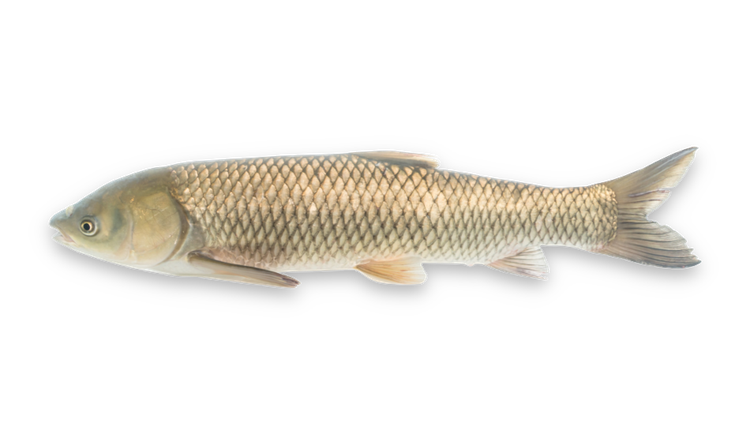
Ctenopharyngodon idella
- Freshwater
- Least concern
Max length59 in
Common length4.25 in
Length typeTotal Length
Max weight99 lb 3 oz
Depth range0 - 99 ft
Max age21 years
Water typeFreshwater
Water temperature32 - 95 °F
Fish info
Short description
Grass carp have an elongated, torpedo-shaped body. Their terminal mouth is slightly oblique with firm, non-fleshy lips and no barbels. The complete lateral line contains 40 to 42 scales, and the pharyngeal teeth are broad and ridged. The body colour is dark olive, transitioning to brownish-yellow on the sides, with a white belly and large, slightly outlined scales. The dorsal fin origin is anterior to the pelvic fin, and the caudal peduncle is short.
Habitat
Grass carp inhabit lakes, ponds, pools and backwaters of large rivers, preferring large, slow-flowing or standing water bodies with abundant vegetation.
Distribution
Grass carp are native to Eastern China and Russia, specifically in eastern Siberia and the Amur River system. They have been widely transported around the world for aquatic weed control (Europe, both Americas, Africa & Australia), and several countries have reported adverse ecological impacts following their introduction.
Behaviour
Adult grass carp primarily feed on aquatic plants and submerged terrestrial vegetation. They may also consume detritus, insects, and other invertebrates. Grass carp can eat up to three times their body weight daily and thrive in small lakes and backwaters with an abundant supply of vegetation. They grow very rapidly.
Edibility
The flesh of grass carp is white, tender, and smooth in texture, with a mild flavor that lacks the typical "fishy" taste. However, like all carp, they have spines that are annoying to remove. Grass carp is a popular dish in Chinese cuisine, particularly in Cantonese dishes.
Lure suggestion
Grass carp are often found below dams or other obstructions to upstream movement during their spring spawning run, even if they are triploid and cannot spawn. Throughout the rest of the year, they can be located in areas with abundant food, such as shallow coves in lakes and backwaters in rivers. These fish tend to be easily spooked by movement on shore. They are fond of feeding on the surface and will take floating baits. Grass carp are known for their strength and can be very challenging to land. The most effective method for catching them is to bait an area and then fish it. Good bait: white bread, berries, corn (boiled maize), cherry tomatoes, and plant matter (iceberg lettuce or grass clippings).