Common names
Hapuka, Whapuku, Groper, Puka, New Zealand groper
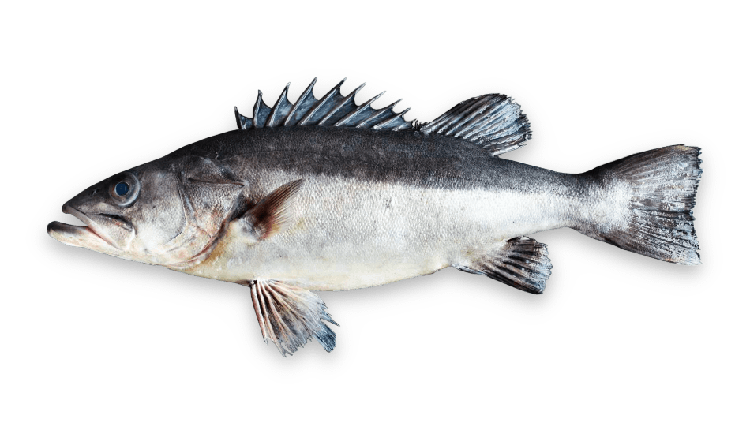
Polyprion oxygeneios
Hapuka, Whapuku, Groper, Puka, New Zealand groper
Hapuku are "gun-barrel" grey in colour with silvery white underbellies, with juveniles generally being blue in colour. Hapuku have a rather heavy, stocky body. They have 10 sharp dorsal spines running along their back followed by softer ones further back and soft ones on their underside. They have a rounded anal fin and rounded pectoral fins, and a large, powerful, square-shaped tail. Its lower jaw protrudes from the top, and their very large eyes are adapted for hunting and inhabiting low-light conditions. As young juveniles, they take on a yellow colour, presumably to blend with kelp.
They are usually found living in cracks, caverns, or caves when found in shallow waters. Juveniles are thought to be pelagic associating with the flotsam and floating vegetation in open water.
Found in temperate and subtropical waters of the southern Indian Ocean and the Pacific Ocean around southern Australia, southern South America, South Africa, Tristan da Cunha and New Zealand.
They are voracious predators, feeding on a large range of other fish species, invertebrates and crustaceans, including red cod and blue cod, hoki, crabs and crayfish. Hapuku are a low-growing, long-lived species.
Excellent, hapuku are a highly rated eating fish, reaching top value on both the local and international markets.
Braid lines around 80lb breaking strain are a must. Puka love a big bait, big lures & jigs are also very effective. Adding light sticks or lumo beads can help attract more attention too. Good baits: squid, tarakihi, blue cod, and oily fish such as tuna, kahawai, trevally, gemfish or mackerel.
Very similar to Bass Groper (Polyprion moeone), with details such as minor variations in colour and fin-spine length used to differentiate between these species.