Common names
Hog snapper, Hoggie
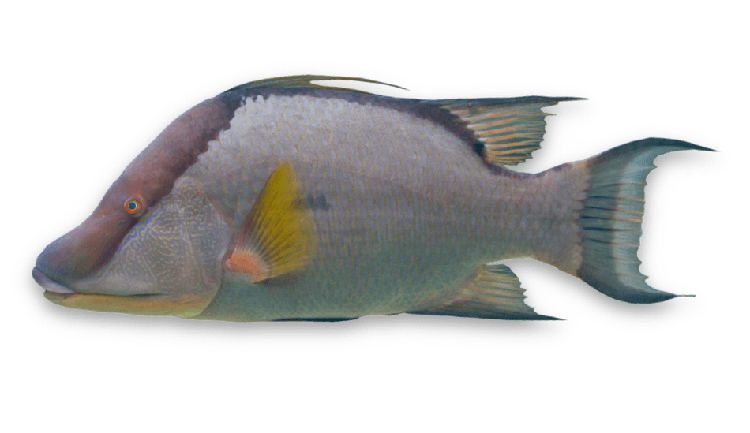
Lachnolaimus maximus
Hog snapper, Hoggie
The hogfish possesses a very elongated snout, this very long "pig-like" snout and its rooting behaviour give the hogfish its name. A prominent black spot behind the pectoral fins differentiates males from females. The dorsal fin usually is composed of three or four long dorsal spines followed by a series of shorter dorsal spines. Females and juveniles usually start out as pale grey, brown, or reddish-brown in colour, with a paler underside and no distinct patterns. Hogfish also have a form of active camouflage to blend in against coral or sand. They have got a deep, strongly compressed body and their tail has elongated upper and lower lobes.
Rocky bottoms, ledges and reefs offshore; young associated with seagrass beds. This species occurs around reefs, especially preferring areas with plentiful gorgonians.
Native to the Western Atlantic Ocean, living in a range from Nova Scotia, Canada, to northern South America, including the Gulf of Mexico.
Long, hog-like snout allows them to feed on bottom-dwelling mollusks and crustaceans, which are buried under the sediment. Because they tend to root in the sediment in search of small prey, they are not commonly caught on hook and line.
Excellent has a mild flavour, they are sweeter than grouper and have a flakier texture than mahi-mahi but large individuals may contain ciguatera toxin.
Use light-bottom tackle while anchoring over hard bottoms. Popular fishing methods for catching hoggies are also drift fishing and chumming. Good bait: live shrimp (work best), squid, or sand fleas.