Common names
Galliwasp, Lagarto, Sand pike
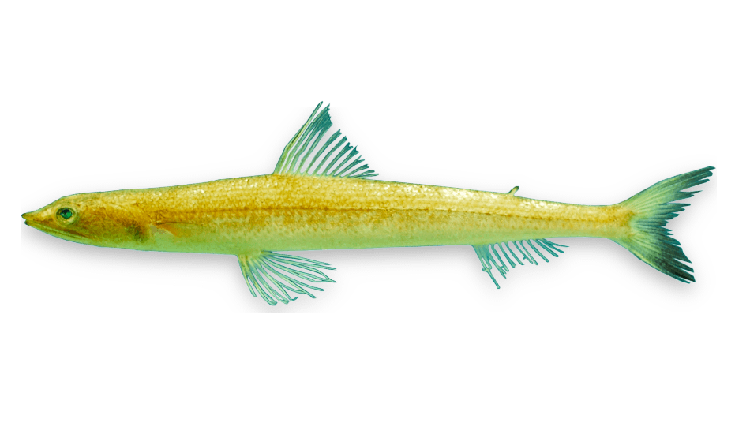
Synodus foetens
Galliwasp, Lagarto, Sand pike
The body of the lizardfish is elongated, resembling a cigar, with females generally larger than males when mature. The mouth is large and pointed, and the snout is pointed, extending beyond the eye. Slender teeth are present in the roof of the mouth and jaws. The lateral line, well-marked, encompasses around 60 scales along the length. Colouration ranges from various shades of brown to olive on the dorsal side and from white to yellow on the belly side. Juveniles have dark spots, which are reduced or absent in adults. Diamond-shaped patches on the sides occur in juveniles and usually fade with growth, often appearing at the mid-lateral line of the fish. The dorsal fin is centrally located on the back, and an adipose fin is present, typically showing a darker spot. The adipose fin is small, with the base no longer than the diameter of the pupil. The anal fin is usually equal in length or longer than the dorsal fin.
The habitats for these fish include the bottom in shallow inshore marine waters, usually over sand or mud bottoms, including creeks, rivers, among seagrasses, estuaries, bays, and lagoons. Adults have been found to be also in the open sea above continental shelves.
Western Atlantic: Massachusetts, USA and northern Gulf of Mexico to Brazil.
The inshore lizardfish is an ambush predator. Its diet consists of various fish and small invertebrates (shrimp, crabs, and cephalopods). They spawn throughout the year. They do not guard their spherical-shaped eggs because the eggs are scattered in the water; they fall into plants and rocks.
In its food value, inshore lizardfish is not good since it is a very bony fish. They supposedly taste good but are rarely eaten by people and not targeted by anglers.
The best time to catch them is between March and June during spawning season. They will hit on almost any baits or lures available. The best way to catch them is by still fishing or drifting. Good bait: squid, sabikis, pile worms, and other strip bait.
Offshore lizardfish, Sand diver