Common names
Tarakihi, Deep sea perch
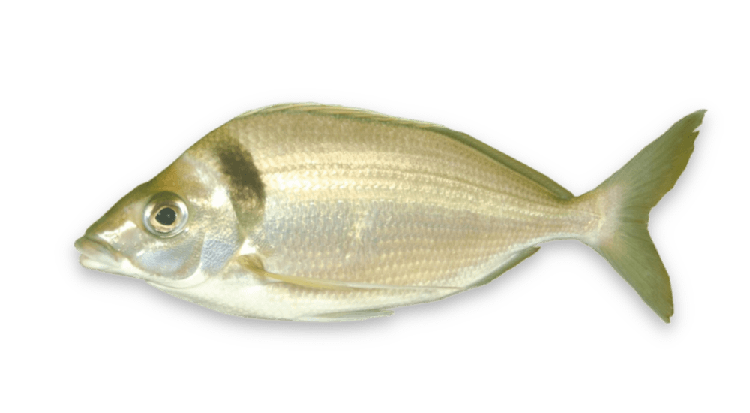
Nemadactylus macropterus
Tarakihi, Deep sea perch
Jackass morwong's head & body are a greyish/silver colour. Some fish may have a yellow/red tinge on the upper body. Jackass Morwong possess a dark band or crescentic marking across the top of their head, extending to the base of the pectoral fins. The fins are light to dark greyish without any clear markings. The juveniles are also silvery but have dark bands or blotches on their upper bodies. The seventh ray of the pectoral fin is greatly elongated and extends past the rest of the fin. has 17 - 18 spines and 25-28 soft rays in its dorsal fin and 3 spines and 14-15 soft rays in its anal fin. Fragile dorsal spines and a thick anal spine capable of causing painful puncture wounds.
Jackass morwong are a temperate demersal species that inhabits the continental shelf and upper slope and occasionally enter large coastal bays. They can be found at depths of 10‑400 metres. Juveniles tend to live near shallow reefs.
Jackass morwong are found in Australia's southern waters, from Sydney to Rottnest Island in Western Australia. On the East Coast, some fish have been caught as far north as Moreton Bay, Queensland. They are widespread in New Zealand, occurring from Cape Reinga to the seas immediately south of the Snares Islands, on the shallower areas on the Chatham Rise and off the Chatham Islands. There are reports of this species from South America and islands in the southern Indian Ocean.
They spawn from the periods of February to June multiple times. They generally occur as individuals or large schools and inhabit deep coastal waters. This species has a diet of benthic invertebrates including polychaetes, crustaceans, molluscs and echinoderms. There are known regular spawning aggregations in New Zealand waters and individuals have been known to migrate up to 500 km (310 mi) from their home range to breed.
Small Jackass Morwong are a popular ‘plate-sized’ fish to roast, steam or BBQ. Morwong is considered good fish to eat and are a good substitute for snapper
Lures that usually work on morwong species are 60g and 80g lucanus jigs and soft plastics (45mm flickbaits with 1oz jig heads). Good baits: prawns (works best), squid and fish strips.
Grey morwong