Nurse shark
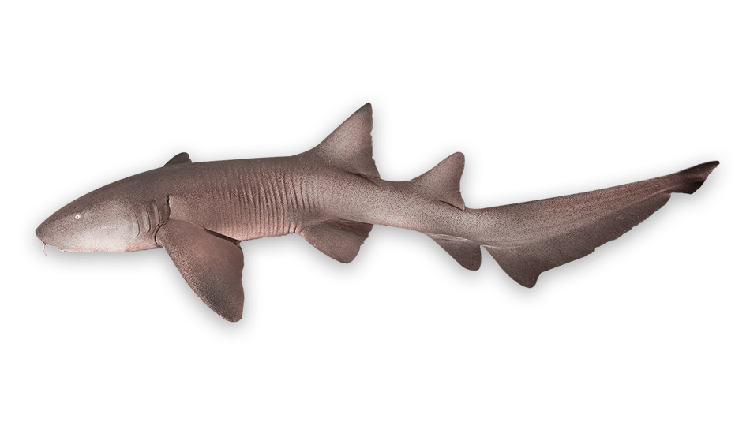
Ginglymostoma cirratum
- Saltwater
- Near threatened
Max length169.25 in
Common length119.75 in
Length typeFork Length
Max weight240 lb 5 oz
Depth range0 - 427 ft
Max age25 years
Water typeSaltwater
Water temperature72 - 82 °F
Fish info
Short description
Nurse sharks have two rounded dorsal fins, rounded pectoral fins, an elongated caudal fin( can be 1/4 of their length), and a broad head. They have a very blunt mouth with nasal barbels on each side and very small eyes. Their jaws are very strong and filled with thousands of tiny, serrated teeth. They are brown to yellow-brown above, and lighter coloured below. Newly born nurse sharks have a spotted colouration which fades with age. They have broadly rounded dorsal and anal fins, the first and second dorsal fins are similar in size. The first dorsal fin begins well behind the pectoral fins. They have got no distinct lower lobe of the caudal fin and no inter-dorsal ridge.
Habitat
An abundant, coastal, tropical and subtropical shark that inhabits nearshore waters. Preferred habitats are coral reefs, rocks, and mangrove islands.
Distribution
A wide but patchy geographical distribution along tropical and subtropical coastal waters of the Eastern Atlantic, Western Atlantic, and Eastern Pacific.
Behaviour
Feed mainly on bottom invertebrates such as spiny lobsters, shrimps, crabs, sea urchins, squid, octopi, and marine mollusks; also feed on some fish species, like catfishes, mullets, puffers and stingrays. They are typically solitary nocturnal animals, rifling through bottom sediments in search of food at night, but are often gregarious during the day forming large sedentary groups. Often seen lying motionless on the bottom. The mating season runs from late June to the end of July.
Edibility
Nurse sharks have tough meat that isn't widely eaten. They are meaty and mild but have to be soaked well before eating because sharks urinate through their skin. Can be delicious if prepared properly.
Lure suggestion
You can use various methods for catching these sharks, including bottom bouncing, bottom jigging, chumming, drift fishing, saltwater jigging, still fishing, and surf casting. Baits that work for grouper will work will for these sharks. Good bait: live or dead squid and crustaceans.
Similar species
Other similar species
Lemon shark, N. brevirostris (lacks nasal barbels)