Common names
Pearlies
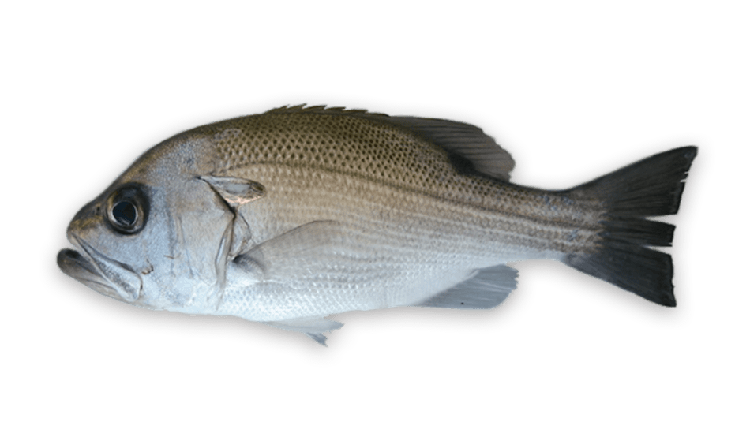
Glaucosoma scapulare
Pearlies
Pearl perch are pearlish-green-silver-grey in colour with golden-brown specks on the scales. Pearl Perch are characterised by a large, shiny mark behind the gill covers and a small, dark blotch at the rear of the dorsal fin rays. Pearl perch can be recognised by their supracleithrum, the bone that projects as a blue-black to grey bony shield from under the upper operculum. If the thin layer of skin covering the supracleithrum is removed, the pearly-white bone is revealed. The colouration of the supracleithrum is the origin of the common name of this fish. They have a robust body, a large mouth and a second dorsal fin which is higher than the first. A brown line passes diagonally through the eye of juveniles. The inside of the mouth is black and may luminescent at night.
Found in coastal waters in moderate depths on the continental shelf particularly close to submerged reefs, rock ledges or rough bottoms.
Pearl perch are found between Port Macquarie in NSW and Rockhampton in Queensland.
This species is stated to be a midwater feeder. They’re usually in small schools on deeper offshore reefs. Pearlies are voracious predators of smaller fish and invertebrates such as squid.
Excellent, pearl perch are regarded as one of the best-tasting fish in the ocean.
There are two basic lure approaches: bounce 1-4oz jigheads (a 4oz jighead is about the size of a 10-ball sinker) on the bottom with a variety of soft plastics, such as 7” straight tails, 4-6” t-tails, and even 4” curl-tails; or, rig a soft plastic on one of the hooks on a dropper rig. Good baits: squid, prawns, baitfish (pilchards, etc.), or flesh strips.