Common names
Black bream, Blubberlips, Northern grunter, Purple grunter
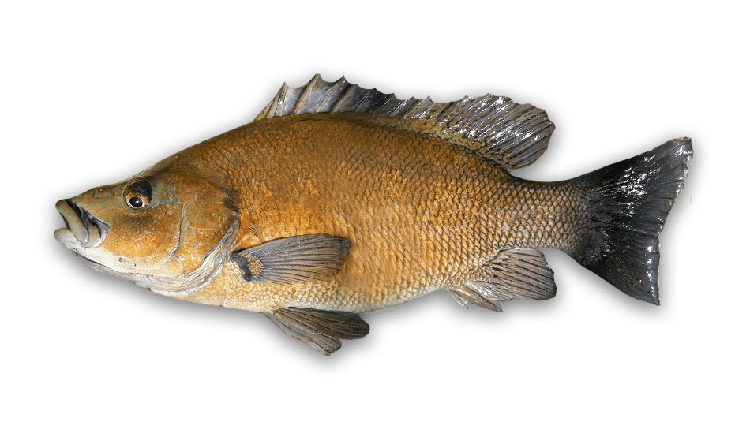
Hephaestus fuliginosus
Black bream, Blubberlips, Northern grunter, Purple grunter
Sooty grunter are brownish-grey to sooty-black with darker scale margins, although some specimens may show golden blotches on the sides. The juveniles possess dark blotches on the anal fin and the soft-rayed part of the dorsal fin. There is a discontinuous lip fold on the ventral side of the lower mandible. As they grow some individuals develop thick, fleshy lips. They have a moderately deep body which is oblong to oval in shape, laterally compressed and a dorsal profile that bulges between the nape and the start of the dorsal fin. The teeth are conical and a little recurved in shape and are arranged in bands, with those in the outer rows the largest. There are no teeth on the roof of the mouth. They have a continuous dorsal fin, the spiny part is arched with the fifth to seventh spines the longest, and the rays are longer than the spines. The caudal fin is marginate.
Sooty grunters inhabit large flowing freshwater streams, preferring rapidly flowing waters with a rocky bottom and sparse aquatic plant cover.
Endemic to northern Australia from the upper Burdekin River in Queensland to the Daly River in the Northern Territory. They have been reported from southern New Guinea although this refers to an undescribed species, they are absent from the Cape York peninsula. They have been widely translocated within Australia.
They are an omnivorous species which has been recorded feeding on frogs, insects, worms, crustaceans, algae, plant roots and palm berries. They spawn during the summer as the water levels rise as a result of the monsoon, they may spawn in groups. The males guard and fan the eggs after fertilisation.
Fair to good eating, with a slightly weedy flavour that deters some people.
They will readily hit soft plastics, minnow lures (7cm to 10cm long) and flies. The right lure choice depends on the time of day, for early in the morning you can use surface & sub-surface lures; during the day you can use spinnerbaits, soft plastics, blade and deep diving lures. Good bait: cherabin, shrimp, cheese (melted on a cloth), or worms.