Common names
Spotted mangrove cichlid, Black mangrove cichlid
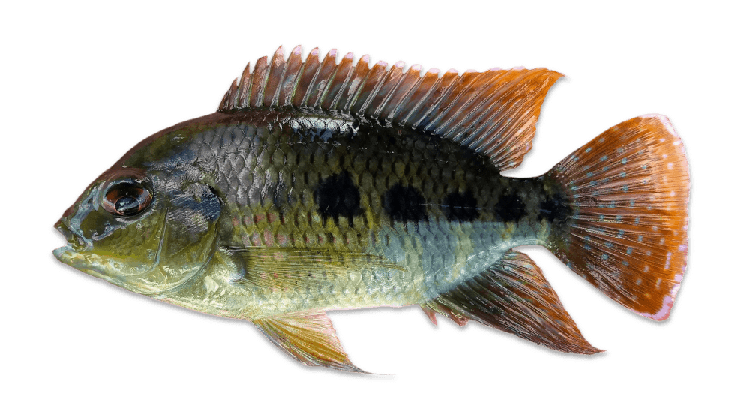
Pelmatolapia mariae
Spotted mangrove cichlid, Black mangrove cichlid
Spotted tilapia have a rounded head profile, short-rounded snout and three anal spines. Their body is moderately deep, compressed oval and rather elevated. They are dark olive green to light yellowish in colour and have eight or nine dark bars on their sides which are more evident in young spotted tilapia than adults. They also have two to six dark spots between the bars in the middle of their side. There is a black stripe crossing the eye on a diagonal from the nape to an area just posterior to the corner of the mouth, and it is most distinct on juveniles. Some have reddish markings on the chin or throat area, especially when spawning. They are covered in ventral scales with central red spots. They have a stouter but similar body and mouth shape to native sunfishes.
Prefer slow-flowing canals, ponds, and lakes. Can also inhabit roadside ditches, creeks and wet prairies, because of simple food requirements and extensive tolerance of environmental variables such as water temperature, salinity, and pollution.
It is native to fresh and brackish water in West and Central Africa but they have also established large feral populations outside of their native ranges, such as in Florida and Australia, where they are considered invasive.
Spotted tilapia are strong, aggressive and very territorial and have the ability to disturb the habitat of other fish populations. They are substrate spawners that lay sticky eggs on hard, flat surfaces, with both parents guarding the young aggressively. Some observed spawning year around, but most spawning seems to occur in cooler months between November and March. Omnivorous, but clearly prefer a herbivorous diet, including algae, higher plants and parts of cassava, but also accept insects and shrimps (along with their eggs), also consume plant matter.
White flaky meat with a mild flavour, considered excellent eating. Taste is largely determined by the growing environment — water quality and food — but good-quality tilapia tastes mild and sweet.
Light tackle is needed for tilapia fishing. Use a 4-to-8-pound test line rigged on a small spinning reel with small #4 or #6 size hooks. Will take artificial lures that resemble tiny fish or invertebrates. Good bait: bread balls, peas, corn, earthworms, or chum.