Common names
Island snapper, Lipper, Red-throat, Red-throated emperor, Sweet-lip, Sweetlip emperor, Sweetlip, Tricky snapper, Redthroat emperor, Trumpeter, Yellow-mouthed perch, Yellow-mouthed snapper
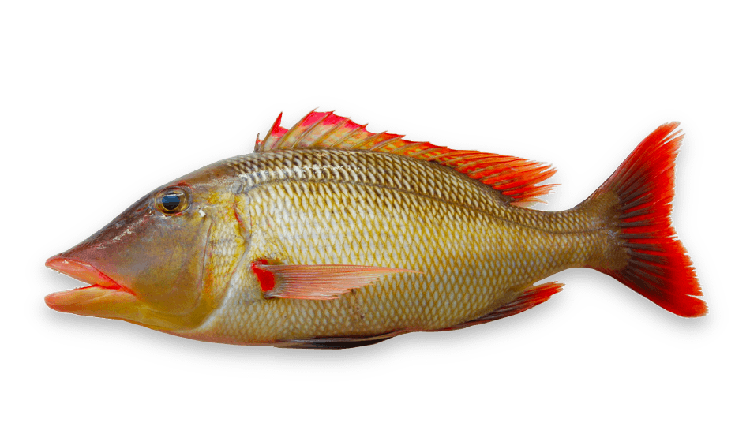
Lethrinus miniatus
Island snapper, Lipper, Red-throat, Red-throated emperor, Sweet-lip, Sweetlip emperor, Sweetlip, Tricky snapper, Redthroat emperor, Trumpeter, Yellow-mouthed perch, Yellow-mouthed snapper
These fish feature a silvery to pale greyish-brown body adorned with small black-scale centers. Distinctive reddish hues and often reddish lips characterize their head, complemented by 8-9 darker bars along their body. Their fins vary from pale to reddish, with the first dorsal fin transitioning from red to a darker shade towards the tail. Noteworthy are the red or orange patches around their pectoral fins' base, eyes, mouth corners, and select areas of their lower fins. Additionally, a red streak often extends from the snout to the upper gill cover, contributing to their identifiable appearance.
They can be found on coral reefs in moderately warm waters. The young live near the shore in seagrass beds and mangrove swamps, where the water is shallow. As they grow older, they begin to move out towards the ocean like the adults. Even though sweetlip emperors live at the bottom of the reef, they are found only on the continental shelf where the bottom is sandy and light. They also choose a home near a reef for protection from other predators.
Western Pacific: The Ryukyu Islands, eastern Philippines, northern Australia, and New Caledonia. Their primary habitat is the Great Barrier Reef, but they can also be found in the coastal regions in the centre of Western Australia.
Sweetlip emperors are carnivorous predators in the reef however, their main prey are small crustaceans such as crabs, as well as sand dollars and small fish. They also eat most other organisms that live near the bottom of the reef. As they grow and get older, their sex changes from female to male.
Has a mild, slightly sweet flavour, low oiliness and moist, firm flesh with large flakes and few bones, which are easily removed. The thick skin is usually removed. The bones make excellent stock.
Chum can be employed to start getting them in a feeding mood. Baits and lures should be fished right on the bottom, although chum may bring them up off the bottom. Soft plastics that imitate crustaceans and fish work well. Good bait: squid, shrimp, fresh-cut flesh, baitfish, octopus, prawns, crab.