Atlantic stingray
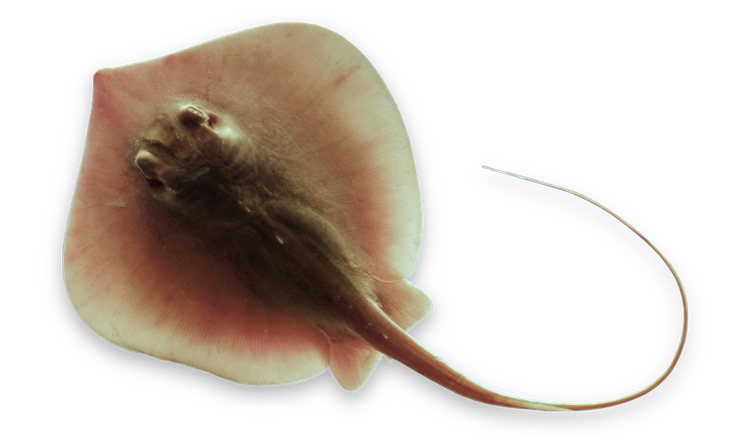
Hypanus sabinus
- Mixed
- Least concern
Max length24 in
Common length10.75 in
Length typeTotal Length
Max weight10 lb 13 oz
Depth range7 - 82 ft
Water typeMixed
Fish info
Short description
Atlantic stingray have spade-shaped pectoral fin disks, with rounded corners and concave anterior margins. Their teeth are rounded with a flat, blunt surface, but during the reproductive season, mature males develop long, sharp cusps that curve towards the corners of the mouth for gripping onto females. Larger individuals may develop tubercles or thorns along the midline of the back and around the eyes and spiracles in some females. The colouration is typically brown or yellowish-brown above, lightening towards the disk margin, sometimes featuring a dark stripe along the midline and white or light gray below. The tail fin folds are yellowish, and larger individuals may have a darkened tail tip. The tail is long and whip-like, with a serrated spine that is about a quarter of the width of the disk, and this spine is replaced annually between June and October. They can be distinguished by their relatively elongated snout compared to other stingrays in the region.
Habitat
This species inhabits shallow coastal waters over sandy or silty bottoms, estuaries, and lakes.
Distribution
Western Atlantic: Chesapeake Bay to southern Florida in the USA and the Gulf of Mexico.
Behaviour
Atlantic stingray are a non-aggressive bottom-dwelling species capable of tolerating various salinities and even entering freshwater. They migrate seasonally to remain in warmer waters, appearing in the northern Chesapeake Bay only in the summer and fall, and retreating to deeper waters during the winter. They scavenge the surf zone and tidal flats for food, preying on benthic invertebrates, polychaete worms, small crustaceans, shrimp, crabs, molluscs, and occasionally small fish. Though typically non-aggressive, the Atlantic stingray's sharp, serrated spine, located near the base of its tail, can cause injury if a human accidentally steps on it. The venomous spine is used strictly for defence and can regrow if lost.
Edibility
The meat is firm, sweet, and tender, with a flavor often compared to seafood like scallops or lobster. It is highly versatile and can be prepared in various ways, including frying, sautéing, grilling, and barbecuing.
Lure suggestion
For targeting larger Atlantic stingrays, a rod around 13 to 14 feet, rated to cast up to 6 or 7 ounces, is ideal. Simple pulley rigs work best in shallow waters. Use a 3/0 circle hook with enough weight to keep the bait on the bottom. Allow the bait to sit there, as stingrays tend to cruise by with their mouths positioned underneath them. It is generally ineffective to attempt catching them with a lure. Be wary of their tail, which can give you a nasty venomous sting. Good bait: cut bait (mackerel, surf perch or croaker), squid, crab.