Southern stingray
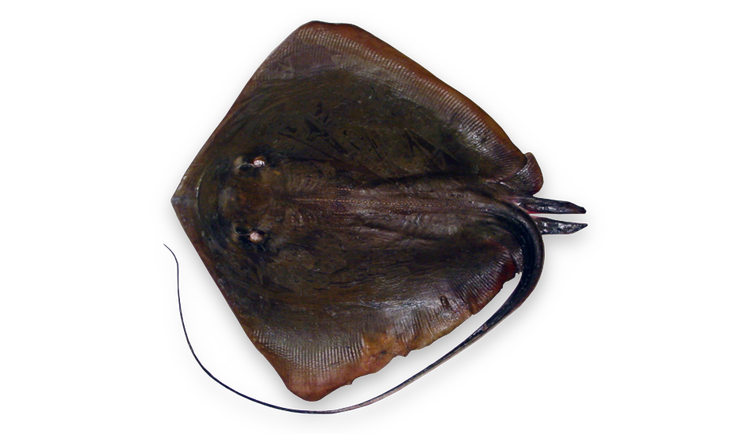
Hypanus americanus
- Saltwater
- Near threatened
Max length78.75 in
Common length35.5 in
Length typeTotal Length
Max weight298 lb 15 oz
Depth range0 - 174 ft
Max age28 years
Water typeSaltwater
Fish info
Short description
Southern Stingray feature a flattened, diamond-shaped body that is more angular compared to other rays. Adults display an olive-brown to green colouration on the top of the body, while juveniles are dark grey, and the underside is white. Their wing-like pectoral fins are used for propulsion along the ocean bottom, and their slender tail is equipped with a long, serrated, venomous spine at the base, primarily used for defence. While the spine is not fatal to humans, it causes severe pain if stepped on. The eyes are located on the top of the head, along with small openings called spiracles. These spiracles allow the stingray to draw in water while lying on the seabed or partially buried in sediment. Water enters through the spiracles and exits via the gill openings, bypassing the mouth located on the underside.
Habitat
They inhabit sandy bottoms, seagrass beds, lagoons, and reef faces. They are commonly found in bays and estuaries.
Distribution
Western Atlantic: New Jersey, USA and northern Gulf of Mexico to southern Brazil, including the Antilles.
Behaviour
They are bottom-dwelling, nocturnal predators that use their unique hunting methods to uncover hidden prey. They spray water from their mouths or vigorously flap their fins to disturb the substrate, exposing invertebrates and small fish. During the day, they often bury themselves in the sand for camouflage, emerging at night to forage, typically in seagrass beds. Their diet mainly consists of bivalves and worms, but they also consume shrimp, crabs, and small fish.
Edibility
Southern stingray meat is tender with a mild flavor, often compared to scallops in both taste and texture. It is easy to cut and can be cooked in various ways.
Lure suggestion
Many anglers target southern stingrays from piers using bait casting or surf casting techniques. Smaller stingrays can be caught using a pole and line set up for bottom fishing with a strong leader and a baited hook. When hooked, reel them in slowly and carefully guide them toward the shore. Since they can grow quite large, a 150-pound braided line is ideal. Be cautious when handling them, as their sting is venomous. Good bait: live bait, such as small fish (for example, pinfish), shrimp, squid or fiddler crab.
Similar species
Other similar species
Bluntnose stingray