Common names
Cobblerfish, Pompano
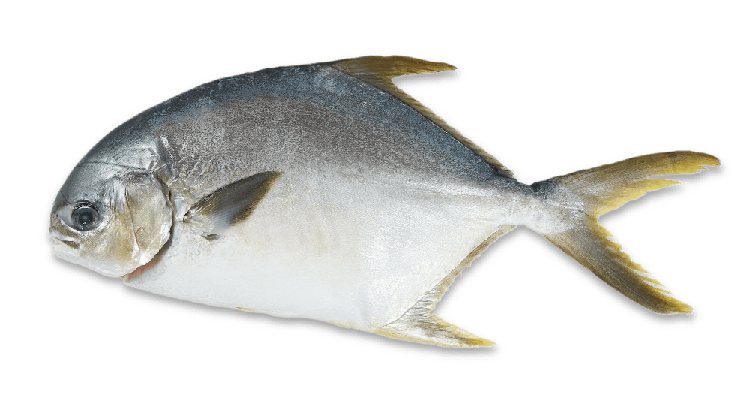
Trachinotus carolinus
Cobblerfish, Pompano
Florida pompano are dark greenish-gray on back, shading to silver sides, and have a yellowish coloration on their belly. Fish found in dark waters have a yellow throat, pelvic fins and anal fin. Their dorsal fin begins in front of the anal fin. Dorsal, anal and caudal fins are short and upright. The first dorsal fins are low, with about six separate spines. The first spine may be reabsorbed in a larger fish. The second lobes on the dorsal and anal fins have a lower anterior. Their forehead slopes gently backward. They have got a deep, compressed body with a small mouth, a blunt snout and a deeply forked tail.
Inshore and nearshore waters, especially along sandy beaches, oyster bars and over seagrass beds, often in turbid water. Found in water as deep as 130 feet.
Despite its name, the range of the Florida pompano extends from Massachusetts to Brazil, but it is more common in areas near Florida.
Spawn offshore March to September. Feed on mollusks and crustaceans, especially sand fleas. Local movements are influenced by the tide, and seasonal movements are influenced by temperature. These fish live in schools, generally spend their time swimming through the surf along sandy beaches in search of bottom-dwelling prey.
Excellent. The pompano's flesh is oily and looks white and opaque. Its diet yields a rich but mild flavour. It is fast-growing and desirable for food, the pompano is one of the many fish that is currently being farmed through aquaculture.
Individually, Florida pompano are caught on light jigs (pink or orange banana jigs or white and pink pompano feather jigs) and popping corks. Good bait: sand fleas & shrimp work best.
Permit, T. falcatus (dorsal fin begins over the anal fin and grow much larger than Florida pompano)