Permit
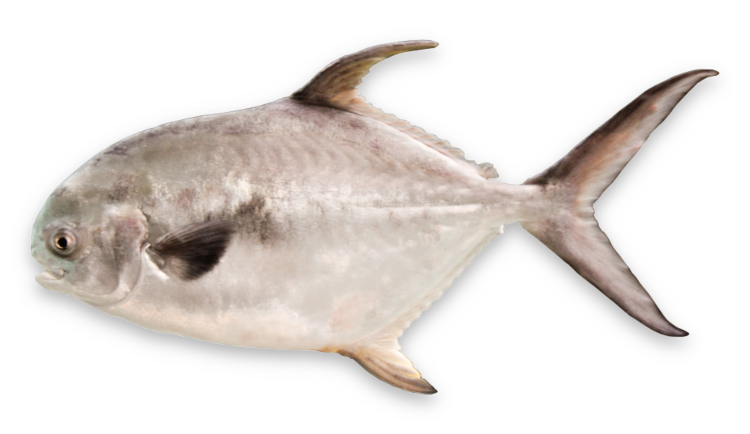
Trachinotus falcatus
- Saltwater
- Least concern
Max length48 in
Common length37 in
Length typeFork Length
Max weight79 lb 6 oz
Depth range0 - 119 ft
Max age23 years
Water typeSaltwater
Fish info
Short description
Permit can be distinguished by their elongated (long and sloped back) dorsal fins and anal fins. The dorsal fin is shaped like a scythe. Permit tails are also deeply forked, and their bodies are compressed laterally, making the fish tall and thin when viewed from the front. They have a grey, dark or iridescent blue back, shading to silver sides. Both dorsal and anal fins have dark, anterior lobes. Permit have no scutes and have a large, orange-yellow patch on their abdomens in front of their anal fins, while their pectoral fins are dark. Permit from dark waters have golden tints on the belly. Small specimen have teeth on their tongue. Their forehead sharply rises to a “hump” and then slopes back.
Habitat
They are usually found in shallow, tropical waters such as mudflats, channels, and muddy bottoms. Although permit are found close to shore and even in some brackish areas, they spawn offshore.Young are found usually in the surf zone.
Distribution
Permit are found in the western Atlantic Ocean from Massachusetts to Brazil, including most of the Caribbean islands.
Behaviour
Spawning occurs primarily in early summer and again in fall. Permit have a specialized plate at the back of their mouth that helps them crush hard-shelled animals such as clams and crabs. Feeds on small fishes and invertebrates. Can be found both, in small schools as well as solitary individuals.
Edibility
Excellent, permit are a great source of protein, essential nutrients, and omega-3 fatty acids, while being low in calories. Permit’s firm, tasty white meat is not overly fishy and is often compared to pompano.
Lure suggestion
Most offshore permit fishing involves tight-lining or dropping the bait straight down below the boat. To rig for using live bait use a 7′ medium action rod, with a light bait-casting or spinning reel, with a 20 lb test braided line. Tie on 18” of 30 lb. Monofilament for a leader, then rig your sinker, and a 2/0–4/0 circle hook (matching the size of the bait you are using). In shallow water fly fishing can be effective as well. Good bait: crabs (work best), shrimp, clams and occasionally small fish.
Similar species
Other similar species
Florida pompano, T. carolinus (dorsal fin begins in front of anal fin)