Common names
Russell fish, Shepherd's pie, Gray bass, Gasper goo, Gaspergou, Gou, Grunt, Grunter, Grinder, Gooble gobble, Croaker, Sheephead, Sunfish
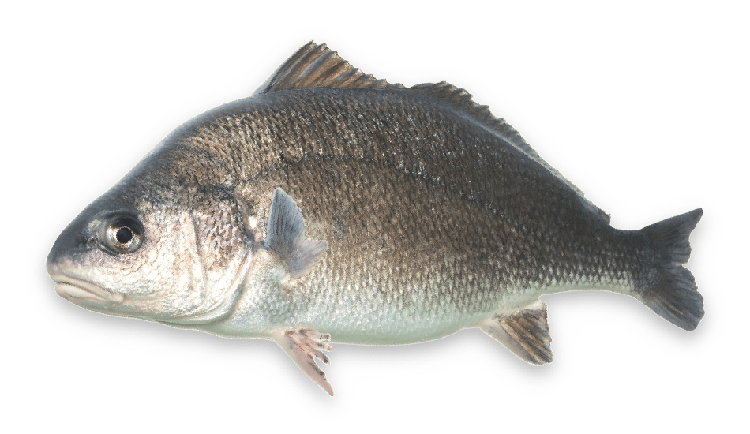
Aplodinotus grunniens
Russell fish, Shepherd's pie, Gray bass, Gasper goo, Gaspergou, Gou, Grunt, Grunter, Grinder, Gooble gobble, Croaker, Sheephead, Sunfish
The freshwater drum, similar in structure to its marine counterpart, the red drum, exhibits a deep-bodied form and a lengthy dorsal fin divided into two sections. Typically, the dorsal fin comprises 10 spines and 29-32 rays. In turbid waters, these drums appear grey or silvery, while in clearer waters, they adopt a more bronze or brown hue. Unlike the red drum, the freshwater drum lacks the distinctive tail fin spot. A freshwater drum’s lateral line extends to the end of its tail, which is farther than most other fish species. Notably, mature males of this species are known for producing a grunting noise, a unique feature attributed to a special set of muscles within the body cavity that vibrate against the swim bladder, which is thought to attract females.
While preferring clear waters with sand or gravel bottom, freshwater drum can tolerate more turbid and murky water conditions if necessary.
North and Central America: St. Lawrence-Great Lakes, Hudson Bay and Mississippi River basins from Quebec to northern Manitoba and southern Saskatchewan in Canada and south to the Gulf; Gulf Coast drainages from Mobile Bay in Georgia and Alabama through east Mexico to Rio Usumacinta system in Guatemala. Freshwater drum are considered to be one of the most wide-ranging species in North America.
Adult drum primarily feed on small fish like shad, aquatic insects like mayflies, and mollusks. Juveniles feed mainly on mayfly and caddisfly larvae. During the summer, freshwater drums move into warm, shallow water where they spawn during a six to seven-week period from June through July when the water reaches a temperature of about 65 °F (18 °C).
It has a mild, sweet flavour with firm meat that flakes into large chunks. Although the fillets are mostly bone-free, they are also thin relative to the size of the fish. As with other gamefish, the dark red meat near the skin (sometimes called a mud line) should be removed along with the skin to improve flavour and reduce contaminants.
Look for them at the bottom of clear, shallow waters with some vegetation. Freshwater drums aren’t hard to catch and don’t fight that hard once they are on the line. For this reason, medium gear will work fine for these fish. You can achieve success through various methods, including drift and still fishing. Employ a range of tools such as jigs, plugs, soft plastic baits, and spoons for optimal results. Good bait: crayfish tails, cut bait, and nightcrawlers.