Common names
Redfish, Channel bass, Puppy drum, Spottail bass, Red, Red fish
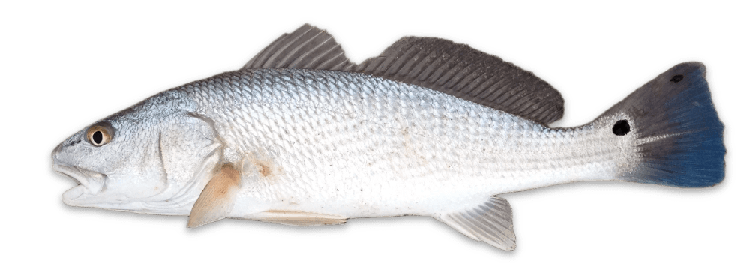
Sciaenops ocellatus
Redfish, Channel bass, Puppy drum, Spottail bass, Red, Red fish
Red drum are a dark copper-bronze colour on the back, which fades into white on the belly. The red drum has a characteristic eyespot near the tail and is somewhat streamlined. The most distinguishing mark on the red drum is one large black spot on the upper part of the tail base. As the fish with multiple spots grow older, they seem to lose their excess spots. Scientists believe that the black spot near their tail helps fool predators into attacking the red drum's tail instead of its head, allowing the red drum to escape. They have a downturned mouth to locate forage on the bottom through vacuuming or biting. They are covered by large scales and have powerful teeth used to crush oysters and other shellfish.
Immature red drum prefer grass marsh areas of bays and estuaries when available. Adult red drum prefer rocky outcroppings including jetties and manmade structures, such as oil rigs and bridge posts. Around this type of structure, they are found throughout the water column.
The Atlantic Ocean from Massachusetts to Florida and in the Gulf of Mexico from Florida to northern Mexico.
In the summer and fall, adult red drum feed on crabs, shrimp, and mullet; in the spring and winter, adults primarily feed on menhaden, mullet, pinfish, sea robin, lizardfish, spot, Atlantic croaker, and mud minnows. Spawning season is from about August through December, in passes, inlets and lagoon estuaries around the state. During spawning season, redfish use special muscles rubbing against their air bladder to produce a "drumming" sound for which they are named.
Excellent, they have a mild, sweet flavour with firm meat that flakes into large chunks. They're low in saturated fats and calories and are a good source of calcium, protein, selenium, niacin, and a host of other vitamins and minerals.
Floating a live shrimp under a popping cork is a good way to fish for redfish. Casting soft-bodied jigs, weedless spoons (working them slowly near the bottom of the water column) and even top-water plugs will catch their attention as well. Good bait: shrimp (work best), crabs, mullet, pinfish, whitebait, and killifish (mud minnows).
Black drum, P. cromis (has chin barbels and lacks spot on tail)