Common names
Drum, Drummer
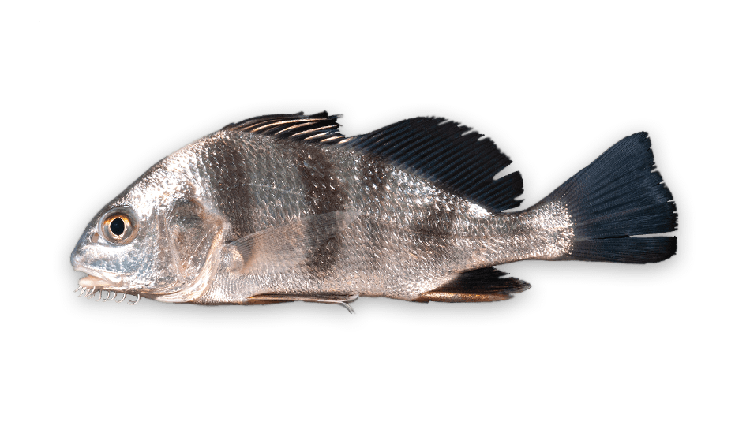
Pogonias cromis
Drum, Drummer
Black drum are the largest drum species. The black drum is a chunky (short, deep bodies), high-backed fish (highly arched) with many barbels or whiskers under the lower jaw. Younger fish have four or five dark vertical bars on their sides but these disappear with age. The bellies of older fish are white but coloration of backs and sides can vary greatly (usually gray or black). They have large scales, their teeth are rounded and they have powerful jaws capable of crushing oysters and other shellfish. Adults have dusky to black fins and are silver with a brassy luster when alive, but change to a dark gray after death. Black drum are capable of producing tones between 100 Hz and 500 Hz when performing mating calls.
They are inshore fish common to bays, river mouths and lagoons. Bottom dwellers are often found around oyster beds, docks and bridge pilings. May also be found offshore. Juveniles found in estuaries.
Found from Nova Scotia to Florida, the Gulf of Mexico, southern Caribbean coast and also from the Orinoco delta to Argentina.
Spawns nearshore in winter and early spring. Black drum feed on the bottom and use their chin barbels to search for food. Feeds on fishes and invertebrates including oysters, mussels, crabs, and shrimp.
Black drum are edible, with a moderate flavor, and aren't oily. Big drums can be challenging to clean. Removing the large scales is a challenge.
The best lures for black drum are 4-inch gulp shrimp with a 1/8-ounce jig head or a 3 to 5-inch paddle tail with a 1/8 to 1/2-ounce jig head. Good bait: cut bait, shrimp, sand fleas or crabs. It is very important to keep the bait on the bottom where the drum feed.
Spadefish