Common names
Gafftop, Seacat, Sail catfish, Sail top catfish, Sail cat
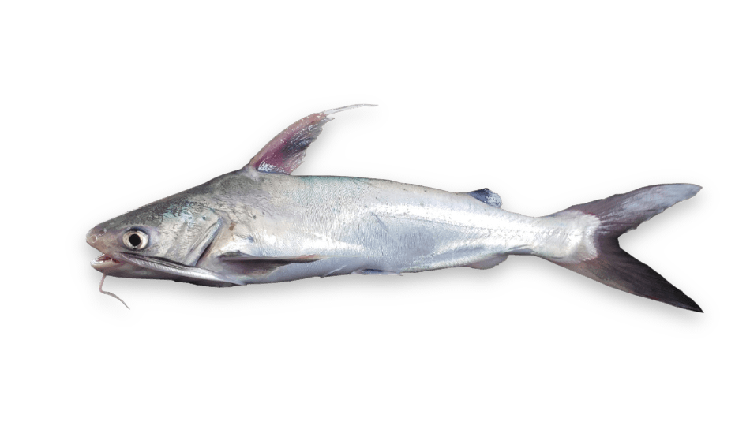
Bagre marinus
Gafftop, Seacat, Sail catfish, Sail top catfish, Sail cat
Gafftopsail catfish are named for the dorsal fin that rises from their back like a sail. A close look reveals the three prominent sharp spines that support the dorsal, or back, fin and pectoral fins on the fish's sides. The three prominent spines have elongated fleshy filaments. These spines are not only sharp, but they also have a coating of toxic slime. They're blue-grey to dark brown with a light grey belly. Their appearance is typical for a catfish except for the deeply forked tail and the venomous, serrated spines. It also has a little hump that looks somewhat like a wave. The gafftopsail catfish have maxillary barbels and one pair of barbels on the chin. Barbels at the corner of the mouth are flattened and very elongated. They are quite similar to the hardhead catfish, which is different by having four chin barbels and spines that lack filaments.
Coastal waters. May enter brackish waters, including estuaries, lagoons, brackish seas, and mangroves.
Gafftopsail catfish live on the Atlantic, Caribbean and Gulf of Mexico coastlines from Cape Cod to Brazil.
Unlike many other catfish, which are primarily bottom feeders, the gafftopsail catfish feeds throughout the water column. It eats mostly crustaceans, including crabs, shrimp, and prawns (95% of the diet), but it will also eat worms, other invertebrates, and bony fishes (about 5% of the diet). Gafftopsail catfish spawn over inshore mudflats during a relatively short time span (10 days) from May to August. They are mouthbreeders.
Gafftopsail catfish are good eating; the red lateral line should be removed to prevent "muddy taste".
They are usually caught with hard lures (spoons) as well as soft plastics, artificial worms, cut bait, and live or dead shrimp. Some fishermen use traps for catfish, a method regulated by some states. The fish will feed throughout the water column, but baits fished near the bottom work best. Good bait: live shrimp, small crabs and small live pinfish.
Hardhead catfish