Common names
Sea catfish, Tourist trout
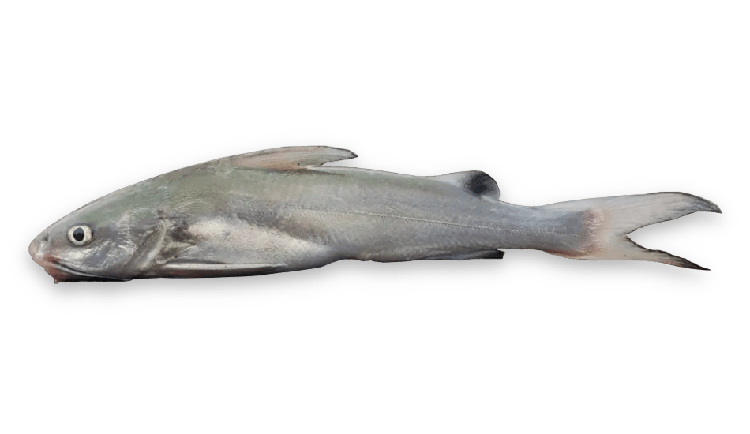
Ariopsis felis
Sea catfish, Tourist trout
Hardheads derive their name from the bony plate situated between their eyes and dorsal fin. Characterized by a slender, elongated shape, they sport a forked tail and a slightly flattened head. Their colouration is silver with brown to olive green undertones, culminating in a yellow-to-white belly. Prominent features include three sharp, serrated spines on both their dorsal and pectoral fins. These spines, coated with venomous slime, are capable of inflicting a painful puncture wound. The hardhead catfish is equipped with six barbels under its chin, aiding in the location of crabs, fish, and shrimp in the muddy bays they inhabit. The dorsal spine typically stands erect when the fish is excited, posing a potential hazard. Notably, the hardhead catfish shares similarities with the gafftopsail catfish, but it lacks the distinctive fleshy extension on its dorsal and pectoral spines, a feature akin to the fore-and-aft topsail of a ship.
Hardhead catfish are mostly found in near-shore waters. Also found in brackish estuaries and river mouths where the bottom is sandy or muddy, but only occasionally enter freshwater. They tend to move from shallower to deeper waters in the winter months.
Western Atlantic: Massachusetts and northern Gulf of Mexico to southern Florida in USA and Mexico.
It's a versatile eater, often navigating mud and sand flats for prey. Primarily a consumer of secondary sources, it mainly consumes debris, small, and larger bottom-dwelling creatures, as well as fish. Its diet includes algae, seagrasses, cnidarians, sea cucumbers, gastropods, polychaetes, shrimp, and crabs. These catfish are commonly spotted in sizable, loosely-formed groups and reproduce during the spring. The males, acting as mouthbrooders, carry the eggs in their mouths until hatching. Young hardhead catfish typically feast on tiny crustaceans such as amphipods, shrimp, blue crabs, molluscs, and annelids. Juveniles, protected by the male mouthbrooder, primarily feed on planktonic crustaceans located near the parent's mouth.
While the flesh is edible, it isn't very tasty and the fish is difficult to clean. The fish's flesh is mild and without any intramuscular bones. And unlike with gafftopsail catfish, there is little powerfully fishy red meat to remove from the fillet.
This catfish is known for being a notorious bait stealer. They can be caught using a variety of techniques, such as bait on a bottom rig or jigging with soft plastic lures. Good bait: shrimp (best), cut bait, or any other natural bait (they're not fussy).