Common names
Giant barracuda
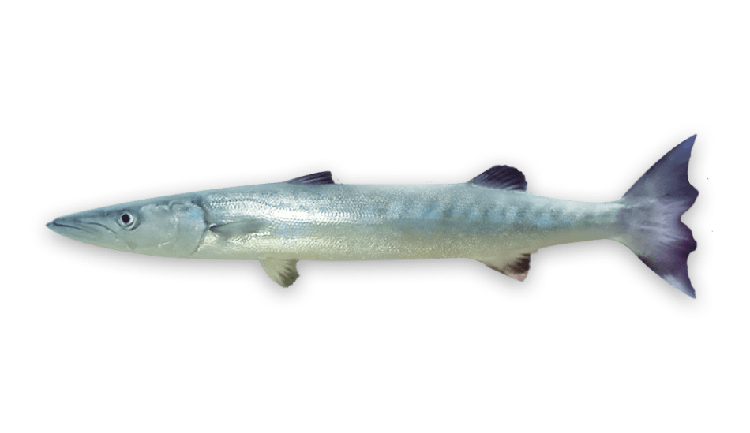
Sphyraena barracuda
Giant barracuda
Great barracuda are blue-grey above, fading to silvery and chalky white below. Sometimes, a row of darker cross-bars occurs on its upper side, with black blotches on each lower side. The second dorsal fin and the anal and caudal fins range from dark violet to black with white tips. In general, barracudas are elongated fish with powerful jaws. The lower jaw of the large mouth juts out beyond the upper. Barracudas possess strong, fang-like teeth that are unequal in size and set in sockets in the jaws and on the roof of the mouth. The head is quite large and is pointed and pike-like in appearance. The lateral line is prominent and extends straight from head to tail. The spinous dorsal fin is situated above the pelvis. The hind end of the caudal fin is forked or concave, and it is set at the end of a stout peduncle. The pectoral fins are placed low down on the sides.
Great barracuda commonly occur in nearshore coral reefs, seagrasses, and mangroves. They may also reside in the open ocean, living predominantly at or near the surface, although they are at times found at depths to 325 feet (100m). Young found inshore in seagrass beds.
The great barracuda is present in tropical to warm temperate waters, in subtropical parts of the Indian, Pacific and Atlantic oceans.
They are voracious predators and hunt by ambush. They rely on surprise and short bursts of speed up to 27 mph (43 km/h) to overrun their prey, sacrificing manoeuvrability. Barracudas are more or less solitary in their habits. Young and half-grown fish frequently congregate in shoals. The diets of these top predators of reefs are composed almost totally of fish, cephalopods, and occasionally shrimp.
Very good, eating barracudas more than about 3.5 feet long isn't advised because they can accumulate a naturally occurring toxin called "ciguatera."
One of the best baits for catching Barracuda is a tube lure. This tube bait mimics an eel fish and is great for inshore fishing on flats and along the shoreline. Good bait: most silvery baitfish (mackerel, small bonita, sardines, etc.)