Common names
Sand seatrout, White trout, Sand trout
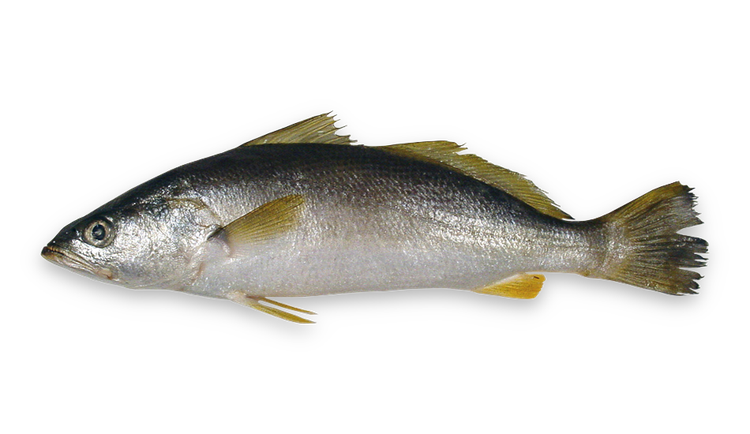
Cynoscion arenarius
Sand seatrout, White trout, Sand trout
Sand weakfish have an elongated and compressed body. The upper body is silvery grey, fading to silvery on the lower body. The anal and pelvic fins are pale to yellowish, while the caudal and soft-rayed dorsal fin have indistinct spots. The axil of the pectoral fins and the inside of the operculum are dark. Their teeth are arranged in several rows, with two large canines at the front of the upper jaw. The lower jaw features a row of widely spaced larger teeth that grow in size towards the back of the mouth. The fish has no barbels or pores on the chin but has two marginal pores on the snout.
Occur usually over sandy bottoms in shallow coastal waters, being relatively abundant in the surf zone and in estuaries.
Western Atlantic: Florida, USA and Gulf of Mexico to Bay of Campeche, Mexico.
During the summer months, sand weakfish move to their nursery and feeding grounds in river estuaries to escape high water temperatures. They primarily feed on fish and crustaceans. During courtship and spawning, the males produce a purring sound by vibrating a special muscle against their swim bladder.
Very good, but its soft texture makes it a difficult Sand weakfish has a good flavor, but its soft texture makes it difficult to freeze. If not prepared immediately, it can become mushy.
Sand weakfish tend to stay on the bottom of the water column. Larger fish can be found in deep inshore holes and offshore waters. A 1/2 oz. silver spoon is highly effective, as sand trout often short strike and will catch the hook trailing the spoon. Adding bucktails can help conceal the hook points, increasing the chances of a successful catch, with most fish being caught in the lip. Small (3") soft plastic swim baits (for example, curl tail grubs) also work well for targeting sand weakfish. They'll hit just about any plastic lure.
Silver seatrout, Silver perch