Common names
Widemouth bass, Bigmouth bass, Black bass, Bucketmouth, Largiesm, Florida bass, Florida largemouth, Green bass, Large mouth bass
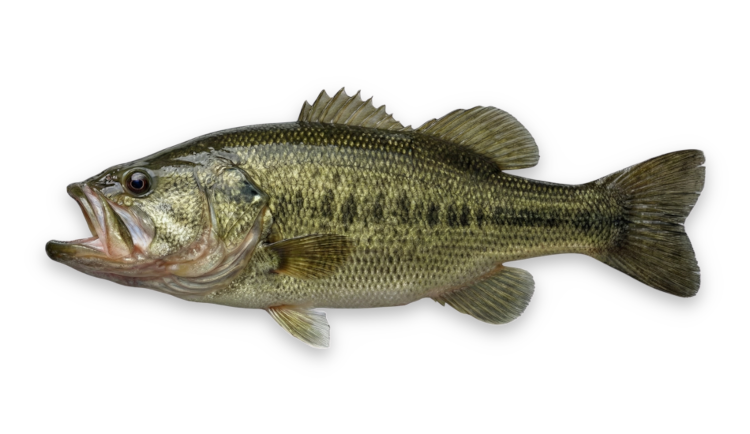
Micropterus nigricans
Widemouth bass, Bigmouth bass, Black bass, Bucketmouth, Largiesm, Florida bass, Florida largemouth, Green bass, Large mouth bass
Largemouth bass are the best-known as the most popular game fish in North America. The largemouth bass have bodies that are both elongated and thick. They are the largest of the black basses. They are an olive-green to greenish-grey fish, marked by a series of dark, sometimes black, blotches forming a jagged horizontal stripe along each flank. The underside ranges in colour from light green to almost white. The upper jaw of a largemouth bass extends beyond the rear margin of the eye. They are distinguished from other black bass because of their upper jaw and the first and second dorsal (back) fins are separated by an obvious deep dip. Females tend to be larger than males.
Found statewide in lakes and rivers, the optimal habitat for this species includes slow-moving, quiet, clear waters with soft, shallow substrates but schooling bass are also found in the middle of lakes. Dense vegetation is ideal for avoiding predation and being predators themselves.
North America: St. Lawrence - Great Lakes, and Mississippi River basins from southern Quebec to Minnesota and south to Gulf; Atlantic and Gulf drainages from North Carolina to Florida and to northern Mexico. The species has been introduced widely as a game fish and is now cosmopolitan. Several countries report adverse ecological impact after introduction - regarded as invasive species.
Largemouth bass spawn in spring, when males fan out a bed and then protect the eggs and fry. The juvenile largemouth bass consumes mostly small bait fish, scuds, water fleas, copepods, small shrimp, and insects. Adults consume smaller fish (bluegill, banded killifish, minnows), shad, worms, snails, crawfish, frogs, snakes, salamanders, bats and even small water birds, mammals, turtle hatchlings, and alligator hatchlings. Adult largemouths are generally apex predators within their habitat.
Largemouth bass can be delicious if prepared correctly, despite not being known as the tastiest freshwater fish. Their meat is described as mild, watery, and can tend to taste fishy.
A medium to medium-heavy rod with 14- to 20-pound test line is preferred, particularly when fishing in areas with thick vegetation or cover. Plastic worms are the most dependable artificial bait for largemouth bass. In dense underwater vegetation, "jerk worms" (without sinkers) are excellent bait. Jigging should be rapid over vegetation and short pauses to let the bait sink a bit. In spring, spinnerbaits are also a very good bait choice. Other effective baits: crankbaits (white, shade, firetiger, crayfish colors), topwater baits, shad, minnows, or shiners.