Common names
Coosa bass, Bartram's bass
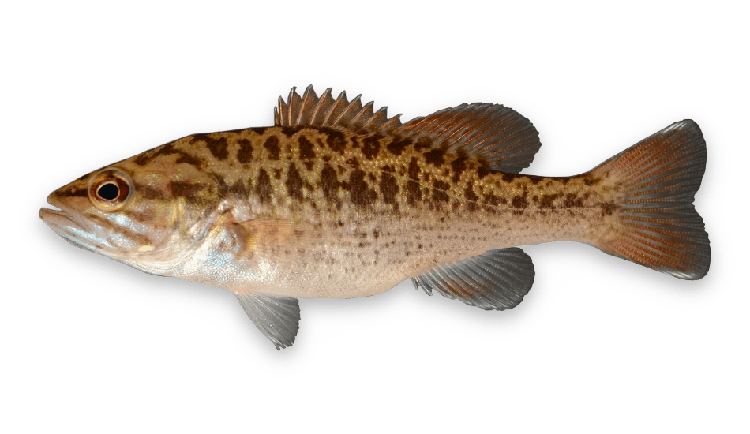
Micropterus coosae
Coosa bass, Bartram's bass
The upper jaw (maxilla) extends to the back of the eye, usually red. The redeye or Coosa bass boasts an elongate, slender form with a large mouth that reaches to or slightly behind the rear margin of the eye. Generally olive to brown with darker brown mottling, the back and sides of this bass present an interesting pattern. Adults exhibit several horizontal rows of dark spots on the lower sides and venter. Breeding males stand out with a light bluish-green colour on the lower head and throat. Juveniles, on the other hand, typically display 10 to 12 dark blotches on the sides of the body, which do not join to form a lateral stripe. A distinctive feature for identification is the white edging on both the upper and lower margins of the caudal fin, providing a useful means of differentiation from both smallmouth bass and shoal bass.
They inhabit rocky runs and pools of creeks and small to medium rivers, also found in upland streams. Redeye Bass are stream-dwelling fish, they prefer moving current and rocky substrate, so you will not find them in large reservoirs.
North America: Savannah, Chattahoochee and Mobile Bay basins in North Carolina, South Carolina, Georgia, Tennessee and Alabama in the USA.
Redeye Bass are opportunistic predators, their primary food source comes from terrestrial insects that land or fall on the water. They will also target insects in their nymph stage as well as minnows, smaller bass, crayfish, frogs, and even mice. They breed in shallow ponds, lakes or creeks.
They have white, flaky meat that tends to be drier than that of a largemouth.
Look for redeye bass hiding in rocks, thick vegetation, and underwater trees as they wait to ambush their prey. A 6-foot light rod with a 4 lb. monoline is recommended for catching them. Since they have big mouths, large hooks are a good option. Redeye bass can be caught with natural bait, as well as artificial lures like plugs, smaller spoons, or spinner baits. They prefer lures that look like their normal prey. Anglers have found that noisy lures also work well. The best methods for catching the redeye bass include bait casting, drift fishing, fly fishing, still fishing, and trolling. Good bait: worms, hellgrammites, fathead minnows, gizzard shad, etc.