Common names
Australian spotted mackerel
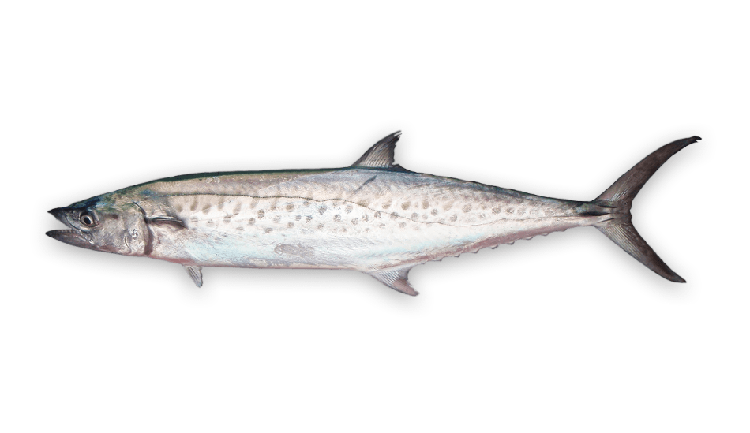
Scomberomorus munroi
Australian spotted mackerel
Spotted mackerel have strongly compressed and elongated bodies. Both jaws have a single series of 5-38 sharp triangular teeth. Body covered in small scales, no anterior corselet present. A single lateral line is gradually curving downward to the caudal peduncle. Caudal peduncle with well-developed keel, flanked on each side by a smaller keel. Dorsal fins are separated by a narrow space. Their body is covered with small scales. Sides with several poorly defined rows of round spots. They are bluish-green above, sides silvery blue, cheek and belly silvery-white. They have several poorly-defined indistinct rows of spots along the sides. The first dorsal fin is completely black or dark-bluish, lacking a white patch, the inner surface of the pectoral fin is dark blue, the anal fin and finlets are pale silvery-grey.
Found more commonly in offshore, open waters away from reefs and shoals. An epipelagic, neritic species, usually found in open offshore waters away from reefs, although known to follow baitfish inshore.
Western Pacific: restricted to the northern coast of Australia, from the Abrolhos Islands region of Western Australia to Coffs Harbor and Kempsey in central New South Wales; also occurring in southern Papua New Guinea from Kerema to Port Moresby. Good baits: Slimy Mackerel, Yellowtail and Tuna, Pilchards and other oily fish. Also respond well to cast and trolled minnow and skirted lures. Sharp teeth require the use of wire leaders.
Feed largely on fishes, particularly anchovies and sardines with smaller quantities of shrimps and squids. On the east coast, spawning occurs offshore in northern Queensland during winter and spring, from August to October, with peak spawning in September. After spawning large schools head inshore and migrate southwards over summer.
Spotted Mackerel have bright cream-coloured, firm, lustrous, moist flesh and a stronger "fishy" flavour. There are only a few bones and these are easily removed.
Typically you use metal slices/jigs to catch spotted mackerel, but you can also use soft plastics, vibes, etc. Good bait: yakkas, pilchards, garfish and herring.
School mackerel - features that distinguish spotted mackerel from school mackerel: Adult spotted mackerel are marked with poorly defined rows of spots on sides, First dorsal fin has 20-22 spines, Inner surface of pectoral fin is dark blue.