Common names
Perch
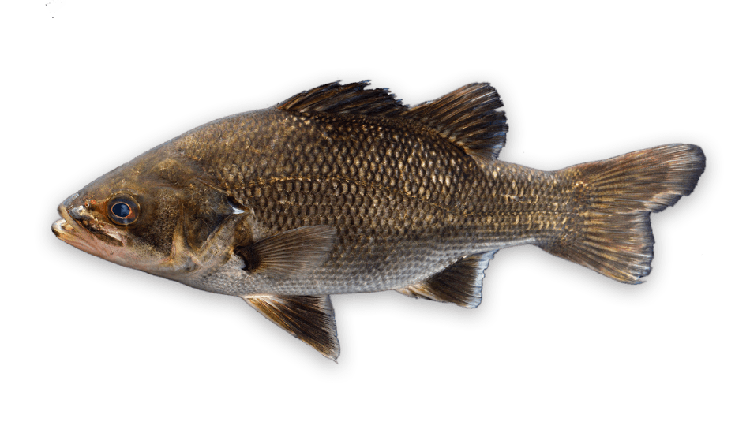
Percalates novemaculeatus
Perch
Moderately large eyes on the side of the head. A large, oblique mouth extending to below the middle of the eye in adult fish. The lower jaw protrudes beyond the upper jaw. Dark olive-green or grey on the back and upper body, lighter on the sides. Yellowish-white to silver on the belly. Upper and lower rear fins often have white edges. Fins are generally greyish to colorless, and translucent. Usually have a very distinct lateral line, following the upper body profile. Often have a red eye color when freshly caught, which fades quickly after removal from water.
Inhabits lakes and small streams in upland and coastal plain areas, including brackish estuaries. Prefers the cover provided by aquatic vegetation in rocky or gravel-bottomed pools.
Found in coastal rivers and streams along the east coast of Australia.
The fish migrate downstream to saltwater to breed during the winter months. Females are much larger than males. The Australian bass is carnivorous, feeding in estuaries mainly on shrimps, insects, worms and smaller fishes. In freshwater, it will feed on insects falling onto the water surface and a variety of organisms living on or near the bottom such as insects, crustaceans, tadpoles and small fish.
The flavour is not exceptional, but can be eaten.
Responds well to artificial flies and lure spinner baits which are both surface and deep. Good baits: insects, small fish, crustaceans and worms.