Common names
Flinders' Sillago, Red Spot Whiting, School Whiting, Silver Whiting, Spotted Whiting, Transparent Whiting
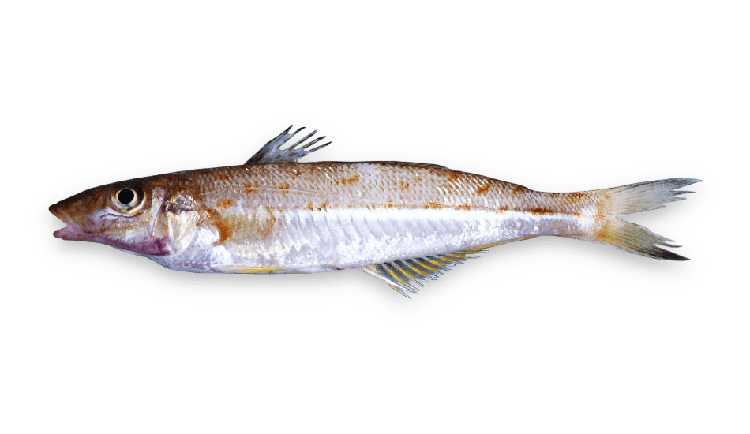
Sillago flindersi
Flinders' Sillago, Red Spot Whiting, School Whiting, Silver Whiting, Spotted Whiting, Transparent Whiting
Eastern school whiting have a slightly compressed, elongated body tapering toward the terminal mouth, with the body covered in small ctenoid scales extending to the cheek and head. A sandy-brown to pinkish whiting, with a series of oblique rusty-red to orange-brown bands above the lateral line, an indistinct silver mid-lateral stripe bordered above by small rusty-red blotches. The eastern school whiting has a pale sandy colour on top with a silvery white below and an olive brown-pink head with blue and yellow tinges. A series of obliquely positioned rusty brown bars are positioned on the back and upper sides, with a longitudinal row of rusty brown blotches along the mid-lateral silver stripe. The ventral and anal fins are also hyaline, with the anal fin having yellow to orange rays with white margins.
They are primarily an offshore species, inhabiting waters on the continental shelf, rarely seen in shallower waters. The species is known to inhabit surf zones and to congregate around coastal lakes, particularly during February and March. They prefer clean sandy substrates, rarely occupying silty or seagrass beds and have never been found in estuarine waters.
Due to the similarity between the eastern and southern school whitings, the exact range of this species is not confidently known, with current sources stating that it ranges from southern Queensland south to New South Wales, Victoria, eastern Tasmania and possibly westward to South Australia.
The average diet of eastern school whiting consists mainly of various crustaceans, principally amphipods, decapods, mysidaceans and copepods. Genetic analysis has shown that migration does not occur in the species, instead they tend to remain in the same area throughout their life cycle.
Eastern school whiting is prized for its sweet, delicate flavour. They are versatile fishes that can be prepared in a number of ways. Careful handling is required because of their soft and delicate texture.
Poppers are the most popular lure choice when it comes to whiting fishing, but surface stickbaits, sub-surface stickbaits, and floating hardbodied lures work as well. Live bait is the best option, be it worms, yabbies or prawns, with blood and wriggler worms being a perfect bait for whiting.
Southern school whiting