Common names
Winter whiting, Diver whiting, Eastern winter whiting, Spotted whiting, Trumpeter sillago, Western winter whiting
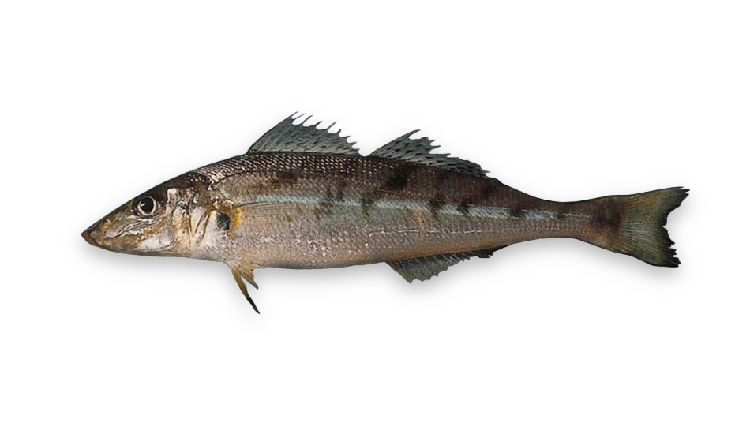
Sillago maculata
Winter whiting, Diver whiting, Eastern winter whiting, Spotted whiting, Trumpeter sillago, Western winter whiting
They are sandy-brown to olive-green or grey becoming silvery-brown above to whitish below, with a dark blotch on the gill cover in some individuals, irregular dark brown blotches on the side, and a golden-silvery mid-lateral stripe. The species has a whitish first dorsal fin with olive-green and brown mottling and about five rows of brownish-green spots on the soft dorsal fin. The anal and pelvic fins are yellowish with pale margins, the pectoral fins are yellow to pale yellowish-green with a distinct blackish-blue spot on the fin base, and the caudal fin is olive-brown to a darker greenish-brown with a darker margin.
Occur on silty and muddy substrates in the deeper water of bays, but also frequent in the mouths of rivers, estuaries, and mangrove creeks. Juveniles are common in sandy and seagrass areas in estuaries and shallow bays during summer, before moving to deeper waters as they mature.
Western Pacific: endemic to Australia. From the Great Barrier Reef, Queensland, to Narooma, New South Wales.
The diet of juveniles consists largely of small crustaceans and that of the adult fish consists mainly of polychaete worms and bivalve molluscs. They spawn several times each year.
They have a delicate, sweet, low oiliness and moist, soft flesh with fine bones, which are easily removed. The edible skin can be left on and the bones make excellent stock.
They are willing biters that will attack most baits, strips of red plastic and even small lures (small worm lures). Good bait: strips of mackerel & squid, worms, yabbies, etc. (they're not fussy).
Oriental trumpeter whiting, Western trumpeter whiting, Other whiting species