Common names
Australian Whiting, Black Whiting, KG, KGW, Pussies, South Australian Whiting, Spotted Sillago, Spotted Whiting
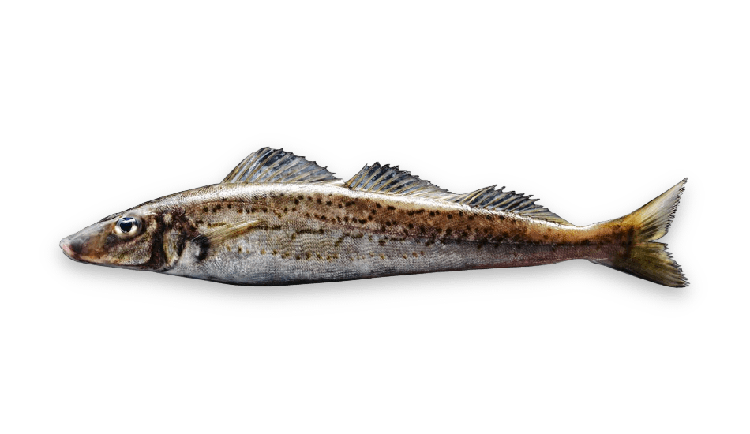
Sillaginodes punctata
Australian Whiting, Black Whiting, KG, KGW, Pussies, South Australian Whiting, Spotted Sillago, Spotted Whiting
The King George whiting has the same overall profile as the rest of the whitings, an elongated, slightly compressed body with a tapering head and terminal mouth. The whitings are distinguished by a first dorsal fin with twelve or thirteen spines and the second dorsal fin with a single spine and 25 to 27 soft rays. In situations where identification is needed quickly, the colour of the King George whiting is also very distinctive, with a pale golden brown to olive brown top colour and white to silver colour on its underside. The species also has distinct obliquely positioned rows of brown spots running the length of its body, which are apparent to see even after removal from the water and after death. The caudal, anal and pectoral fins are usually light brown, with some having olive green caudal fins.
They are most commonly found in tidal bays, estuaries and creeks along the coast of the mainland and numerous islands scattered throughout the species’ range. There is a distinct difference in habitat between the adult and juvenile fish, with the juveniles more inclined to inhabit shallower waters in protected bays, creeks and estuaries. A favourite habitat of young fish appears to be Zostera and Posidonia seagrass beds in protected bays, apparently using the seagrass as protection and for foraging purposes.
The King George whiting is endemic to Southern Australia, ranging lower Western Australia, South Australia, Victoria and occasionally even lower New South Wales. The westernmost reported capture was in Jurien Bay and the furthest east King George whiting have been reported from is Botany Bay in New South Wales (although this appears to be a rare occurrence).
Juveniles feed on benthic amphipods and other crustaceans. As they grow larger, their diet expands to include polychaete worms, mollusks and peanut worms. They are serial batch spawners, yet the number of spawnings in a season is unknown. May and June are the most common times for spawning, with some spawning events recorded as early as February and as late as July.
King George whiting is the most highly-regarded of all the whitings. Prized for its firm, clean, sweet-tasting white flesh and its delicate flake.
Jigging for whiting can be undertaken in a range of depths, from offshore reefs through to bays, but is undoubtedly most effective when you have a bit of water underneath you as the fish can stack up tightly and be more competitive. Depending on the depth fished jig selections can range from 5g up to 80g or so, but for the most part, 20-40g is ideal. King George in bays will readily eat a range of 2-4 inch soft plastics and small hard bodies such as vibes. Good bait: squid (works best), sand or blood worms, prawns and whitebait threaded onto a long shank hook.
Other whiting species