Common names
Araara, Blue Trevally, Blurter, Bruised-face Trevally, Jack, Ranger, Silver Bream, Skipjack Trevally, Skippy, Trevally, White Trevally
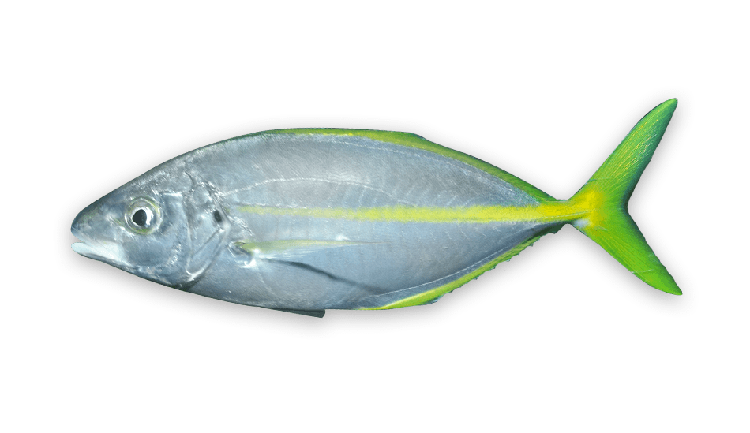
Pseudocaranx georgianus
Araara, Blue Trevally, Blurter, Bruised-face Trevally, Jack, Ranger, Silver Bream, Skipjack Trevally, Skippy, Trevally, White Trevally
Silver trevally have moderately compressed and elongated bodies. The upper body portion is a bluish-silver colour, the belly is silver and the sides are a yellow-silver shade. A small black blotch is found on the bony flap covering the gills. The fish have two dorsal fins, two small detached spines in front of the rear fin and a deeply forked tail fin. Juveniles and sub-adults usually have a yellow mid-lateral stripe and a faint yellow stripe along the bases of the dorsal and anal fins. The pectoral fins are long, slender, and scythe-like, reaching almost to the straight part of the lateral line. Enlarged bony scales are present at the rear end of the lateral line. The scales are absent below and before the eye.
Occur in large schools over reefs and surrounding sandy areas. Individuals also enter estuaries and school over artificial reefs. Adults prefer deeper waters around headlands, while juveniles occur in shallow coastal waters and are more strongly reef-associated than adults.
Found in southern Australia from north of Sydney, New South Wales, to just north of Perth, Western Australia. Elsewhere the species occurs in New Zealand.
A pelagic species that occurs in large schools. Spawning happens in estuaries and in deeper waters between spring to autumn over an extended period. Their diet includes polychaete worms, molluscs, and crustaceans (including krill).
Known for a less oily and lighter taste than other trevally, silver trevally are incredibly delicious, holding rich flavour, but are quite a dry fish.
They will happily take a range of soft plastics and shallow diving lures. Effective plastics include worm and minnow imitations, grubs, curl tails, and paddle tails. Good baits: marine worms, prawns, pilchards, squid, or fish strips.
Other trevallies