Blackfin tuna
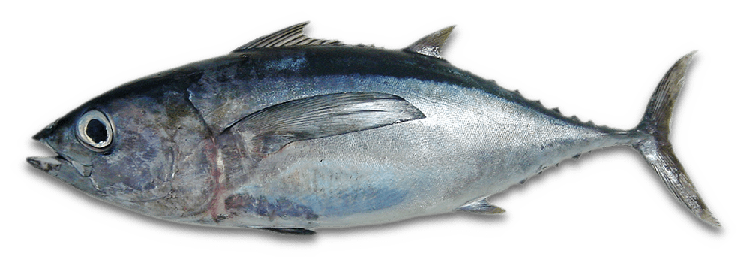
Thunnus atlanticus
- Saltwater
- Least concern
Max length42.5 in
Common length28.25 in
Length typeFork Length
Max weight44 lb 1 oz
Min Depth164 ft
Water typeSaltwater
Fish info
Short description
Blackfin tuna are the smallest species of tuna. They have an oval-shaped body with a dark bluish-black back, gray to silver sides, and a white belly which gives them an iridescent appearance in the water. A broad, brown/bronze stripe is located along the upper portion of the eye. There is a prominent yellow to golden-colored lateral band present on the sides, usually fading upon death. The second dorsal and anal fins are not elongated. The second dorsal fin is dusky and all finlets are dark with white edges. The long pectoral fin nearly reaches below the beginning of the second dorsal fin. They have durable, compact scales with an oblique mouth.
Habitat
Occurring in oceanic waters in close proximity to the coastline, blackfin tuna prefer clean water and warm temperatures, usually seaward from the continental shelf.
Distribution
Found in the western Atlantic from Martha's Vineyard, Massachusetts, to Brazil, including the Caribbean Sea and the Gulf of Mexico.
Behaviour
It is a strong schooling and migratory fish. Various fish, squid, amphipods, shrimp, crabs, and stomatopods constitute the diet of the blackfin tuna. It often feeds in surface waters where they form large mixed schools with skipjack tuna.
Edibility
Very good, especially when eaten fresh. The taste and quality of blackfin tuna are comparable to that of its popular relatives and can be prepared in the same ways.
Lure suggestion
Methods of capture include trolling, drift fishing, and sport fishing with a pole and live bait (works best) or lures like ballyhoo rigs, small feathers, jigs, or cedar plugs. Good bait: sardine, herring, goggle eye or pilchard.
Similar species
Other similar species
Yellowfin tuna, T. albacares (elongated second dorsal and anal fins), Other tuna species